2025
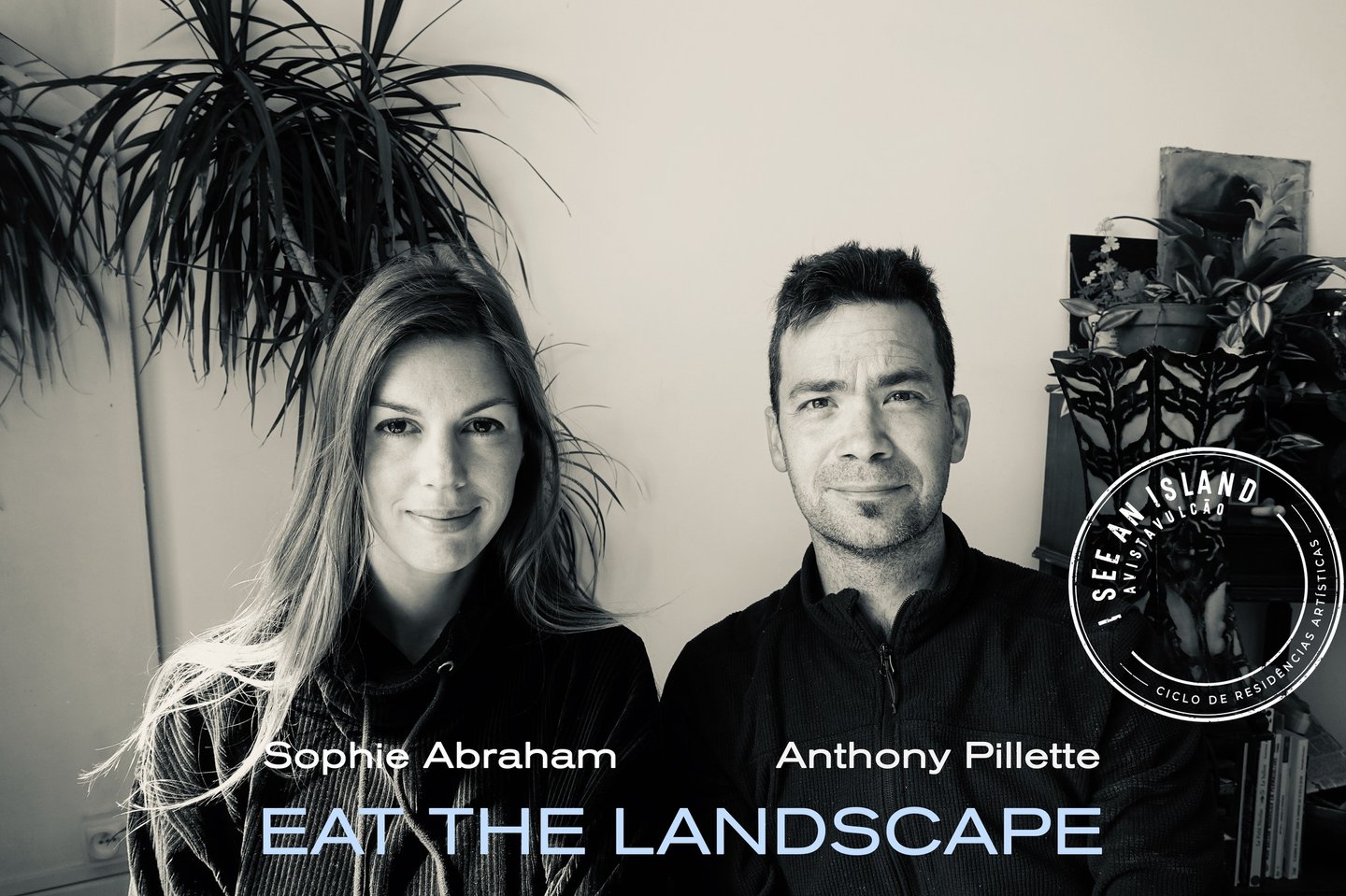
Sophie Abraham, a visual artist specializing in video, photography, drawing, and cartography, and Anthony Pillette, a professor of digital art at the Marseille School of Fine Arts, invite the public to a sensory and creative experience. Members of the Reso-nance Numérique association, based in Marseille (France), the two artists regularly hold international exhibitions, both as a duo and individually. At the same time, they also develop artistic and educational projects in schools and museums.
WORK - EAT THE LANDSCAPE
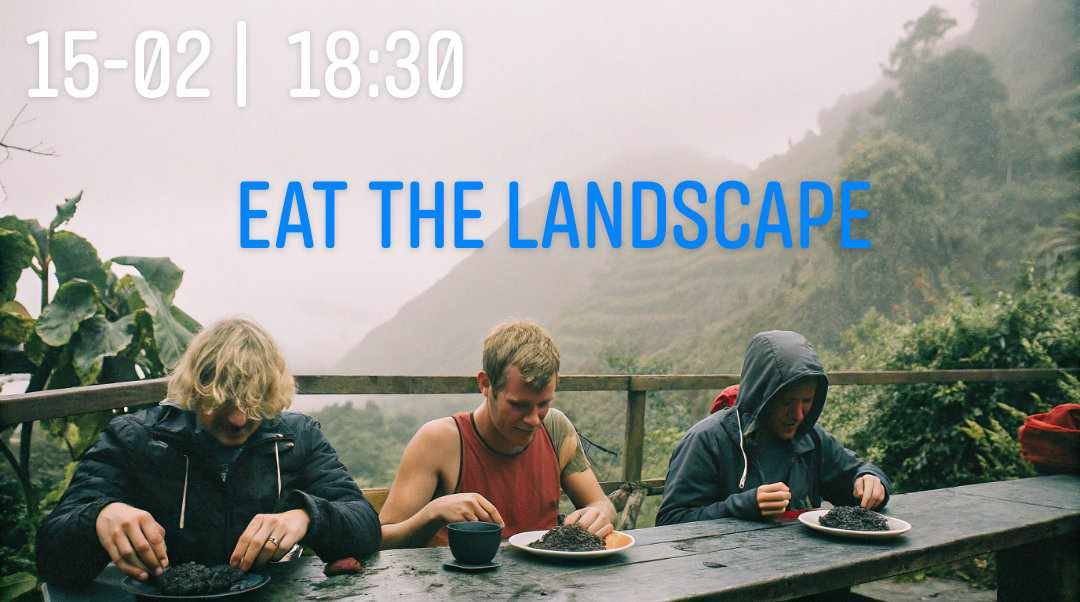
The artists visited Faial Island to conduct field research and gather images on the theme of subsistence agriculture and architecture, using digital art and traditional photographic techniques, in search of a unique and innovative perspective on the landscape and humanity’s relationship with the natural environment. With this project, they aim to explore the possibility of a more harmonious coexistence between humans and nature, building on their previous work titled Cabanes du Futur.
https://www.instagram.com/cabanes_du_futur/
The artists focus on contemporary social and environmental issues, with a keen eye on specific territories, such as islands, and their unique dynamics. By combining traditional photographic processes, such as antotype and cyanotype, with digital technologies, the artists explore the coexistence of humans, nature, and machines in a hypothetical future.
The French artist duo addresses themes such as the resilience of nature, the exploitation of natural resources, energy production, and the impact of mass tourism on island territories, always within a contemporary context marked by climate change and globalization.
EAT THE LANDSCAPE aims to reflect on the ambivalence between progress and tradition: How can we feed ourselves sustainably in a specific territory like an island, while respecting nature and striving for self-sufficiency?
The project’s goal is to spark a collective reflection on the evolution of lifestyles, with an emphasis on nourishing and sustainable practices, such as peasant agriculture and gardening, which present themselves as a utopia and a model for the future.
The artists seek to create a repertoire of gestures—both traditional and innovative—linked to industrialization or new low-tech solutions. Through the printing of digital images modified by AI software and alternative historical processes such as cyanotype, they aim to convey the intention of imagining possible futures, utopian or dystopian, in which the island becomes a self-sufficient refuge, anchored in its deep connection to nature and the landscapes that define it.
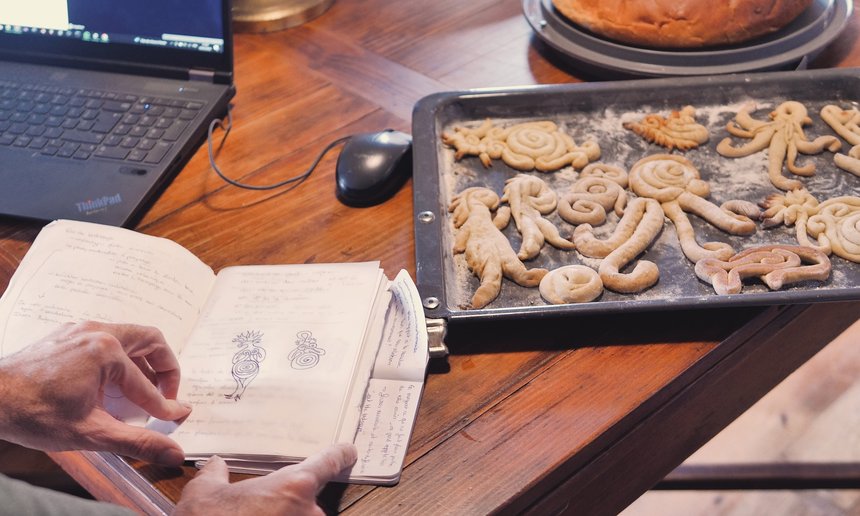
PRESENTATION OF THE CREATIVE PROCESS - EAT THE LANDSCAPE
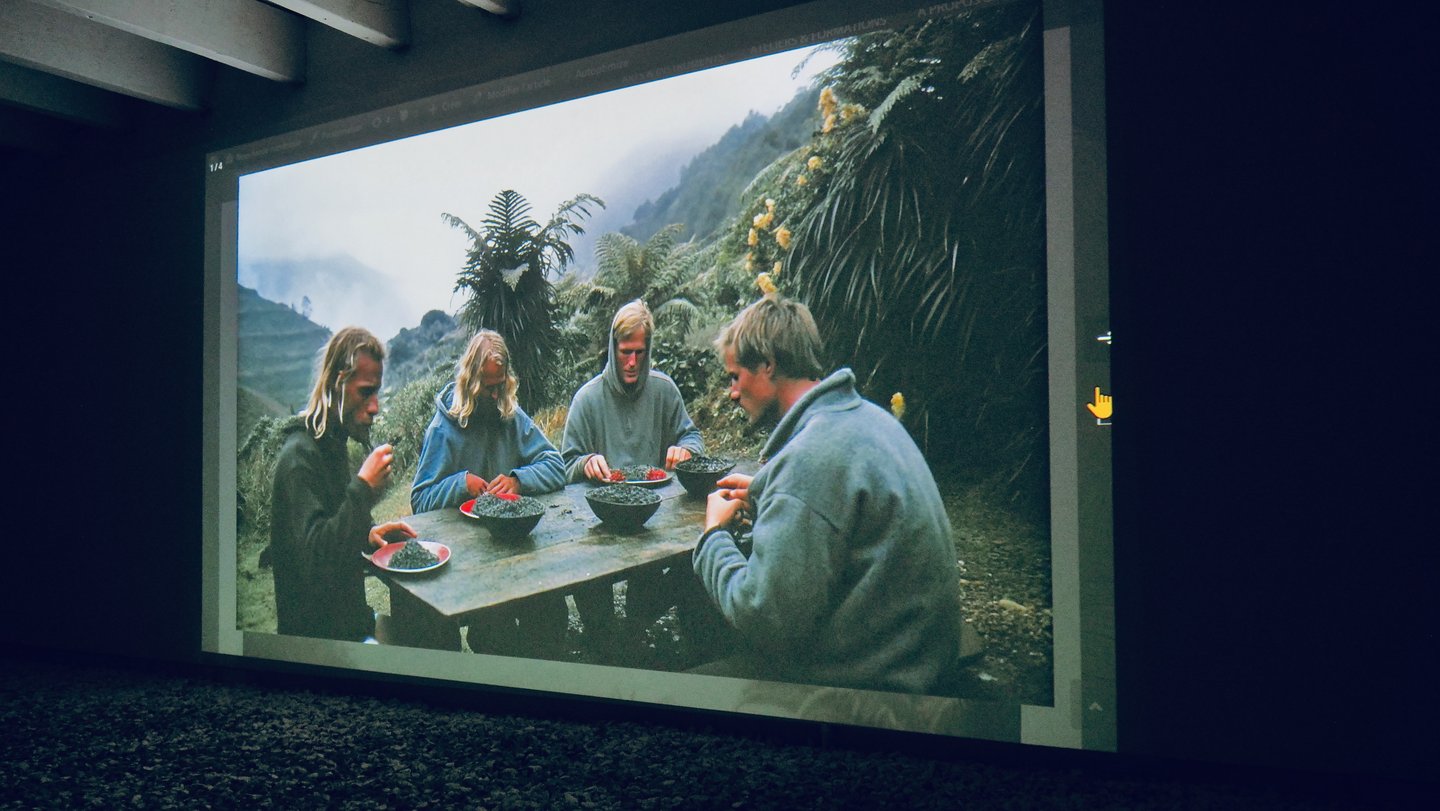
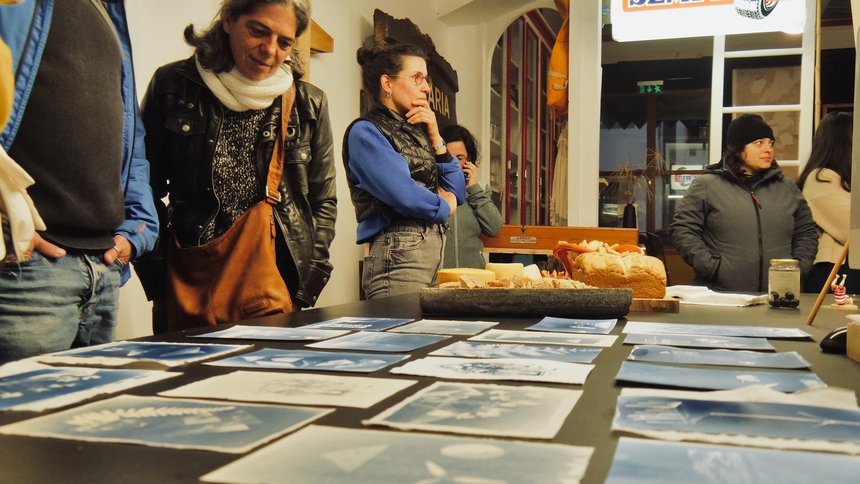
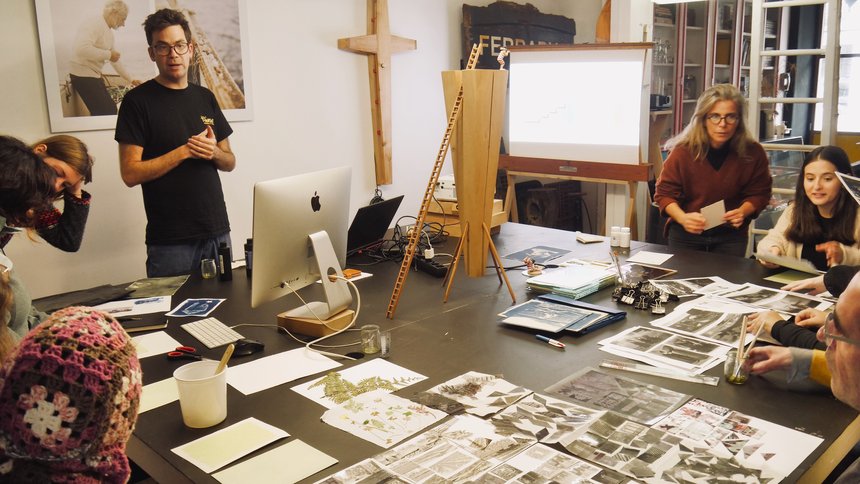
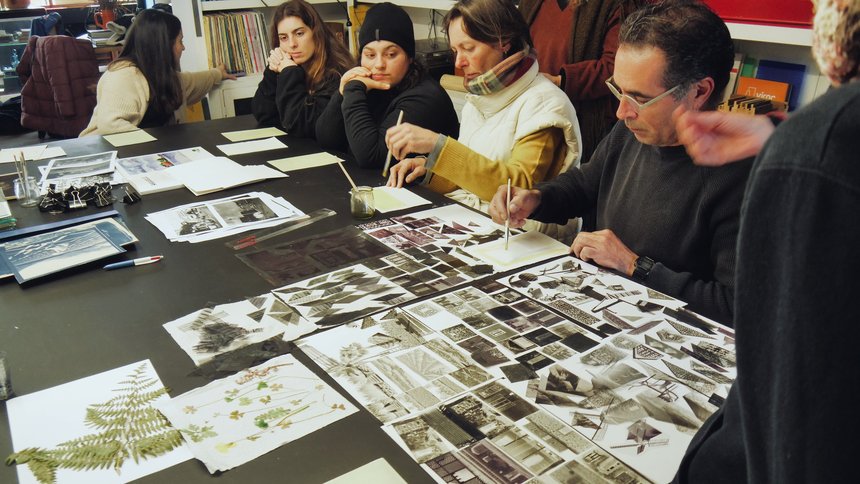
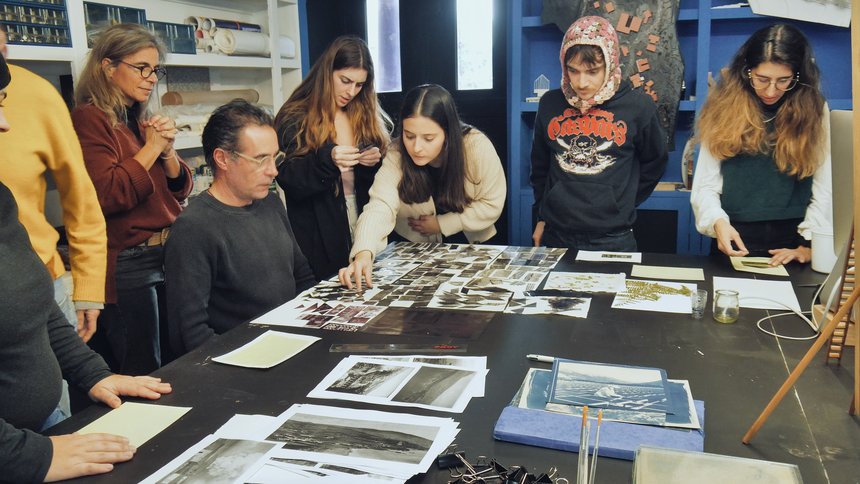
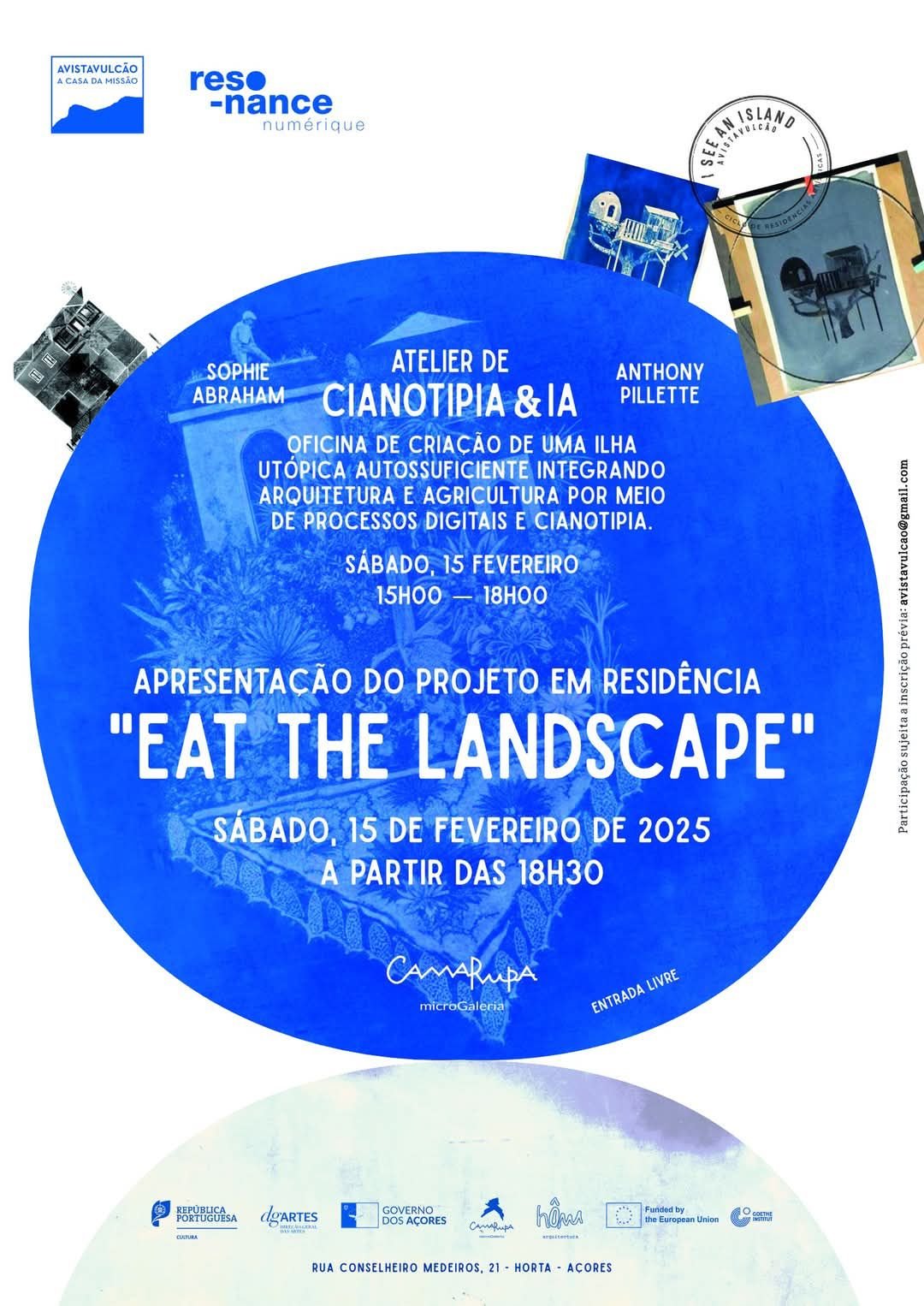
At an event open to the public, the artists shared the entire creative process during a workshop followed by a discussion with the community.
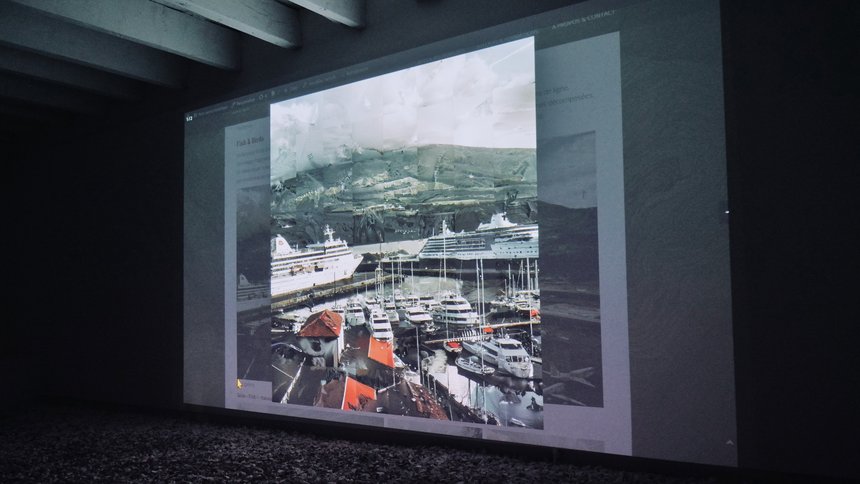
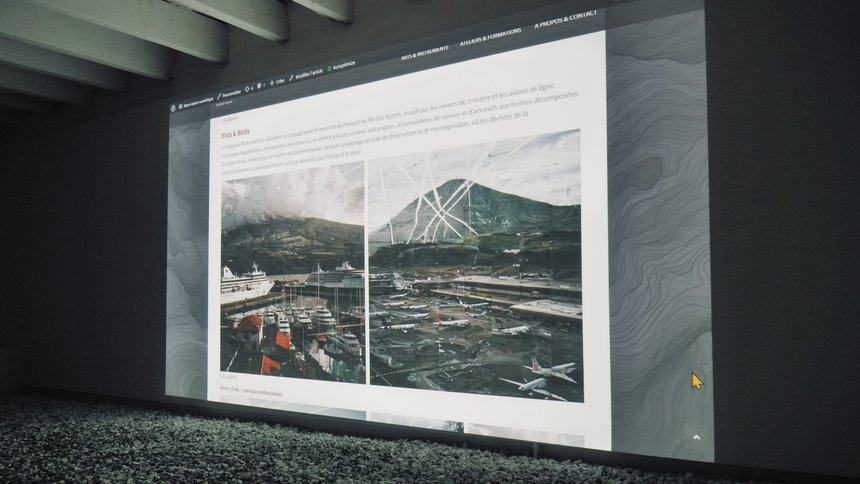
Using an approach that combines digital and traditional techniques, such as AI and cyanotype, participants are guided to envision sustainable habitats inspired by a time when the Azores relied almost exclusively on local agriculture, with minimal imports.
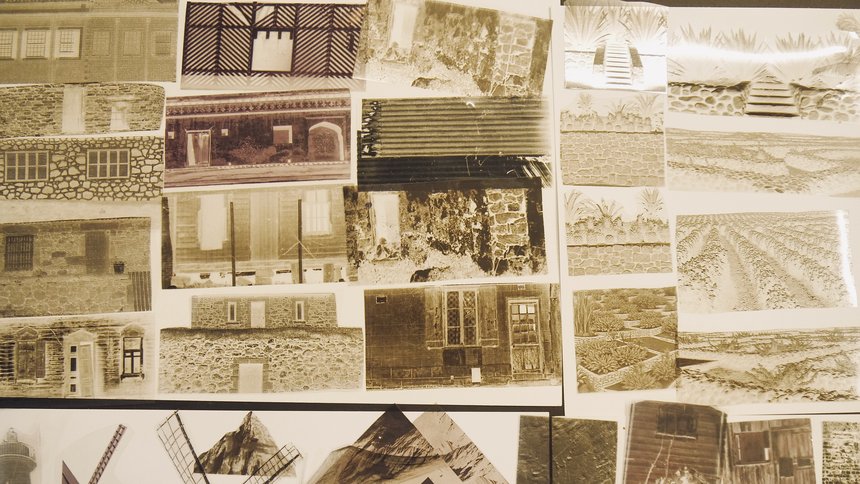
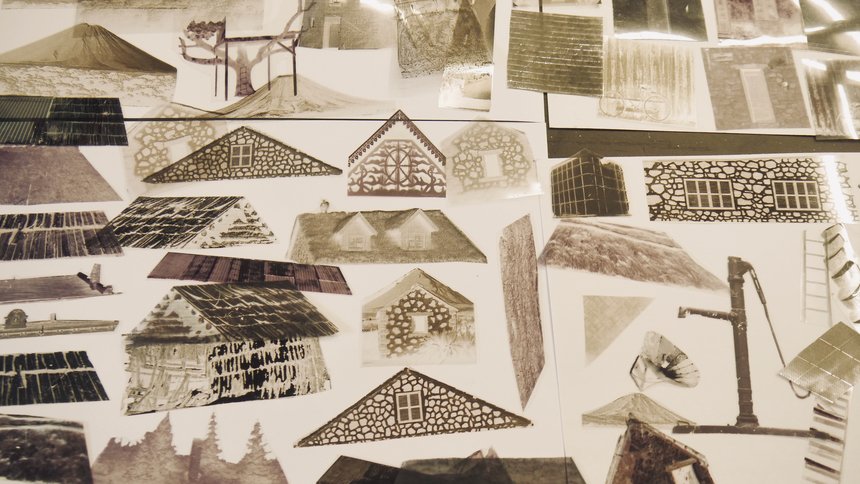
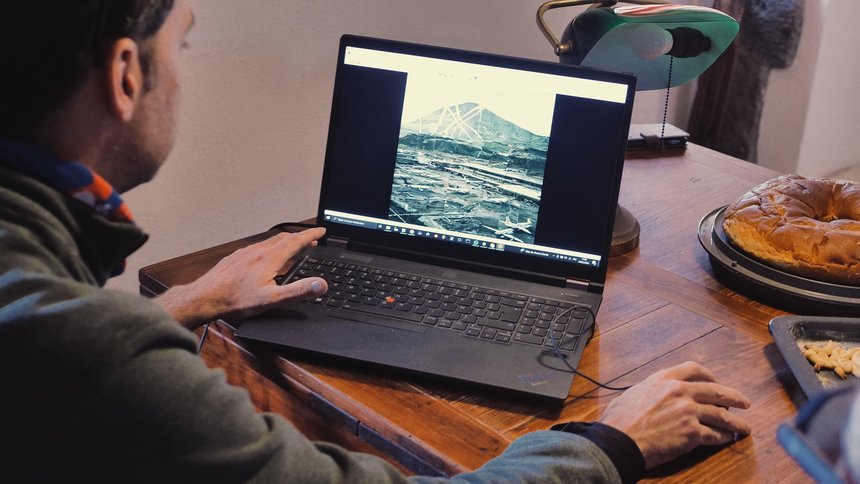
Using photographs of buildings and landscapes from the islands, participants edited images with the help of artificial intelligence, integrating architectural forms with natural elements such as gardens and plants, creating innovative designs aimed at achieving a self-sufficient lifestyle.
Throughout this workshop, participants had the opportunity to work collectively to create a utopian vision that reconnects architecture with local agriculture.
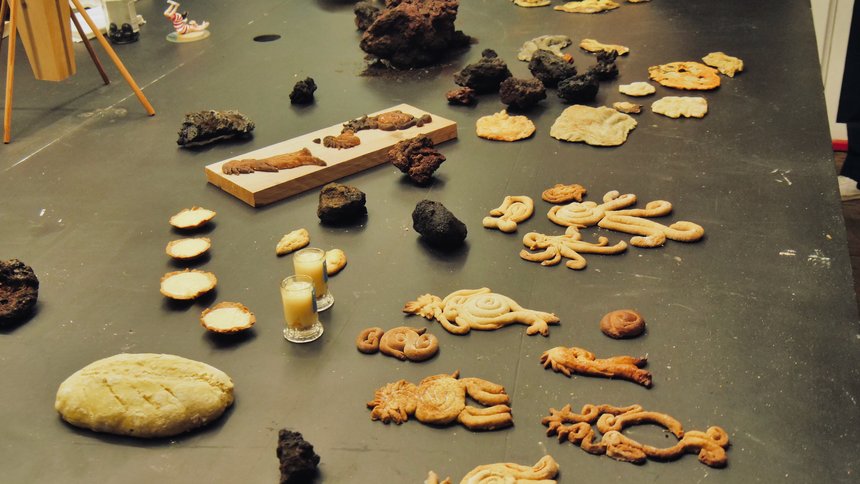
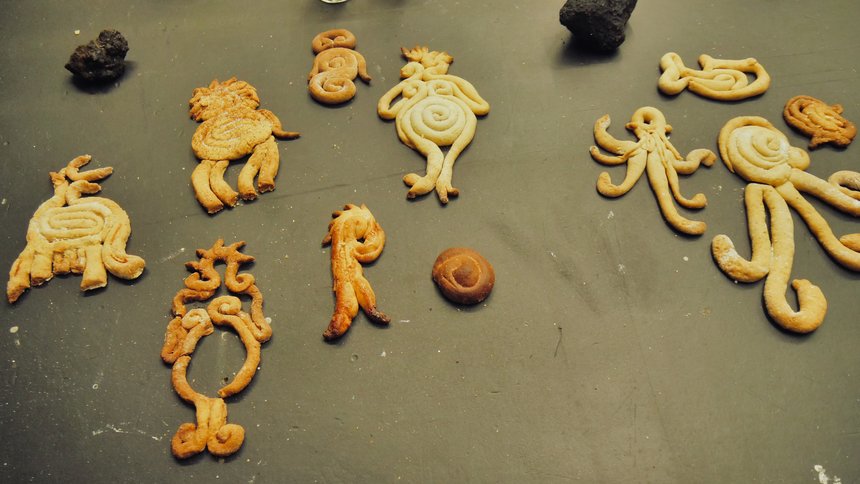
WORKSHOP - EAT THE LANDSCAPE
Atelier Cianotipia & IA where artists invite participants to combine creativity and technology in an artistic exploration where architecture and edible gardens come together to bring imaginary compositions to life, thus offering a unique experience that not only explores the connection between architecture, nature, and sustainability but also provides a profound reflection on the role of art in building a more balanced and self-sufficient future.
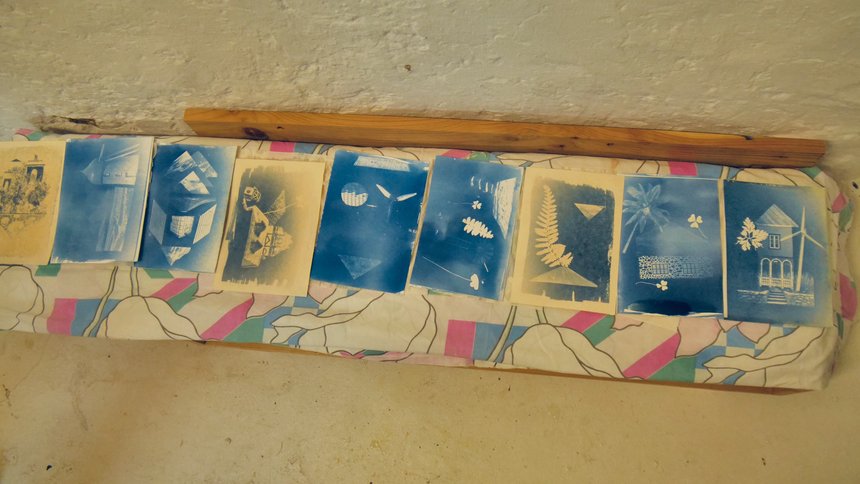
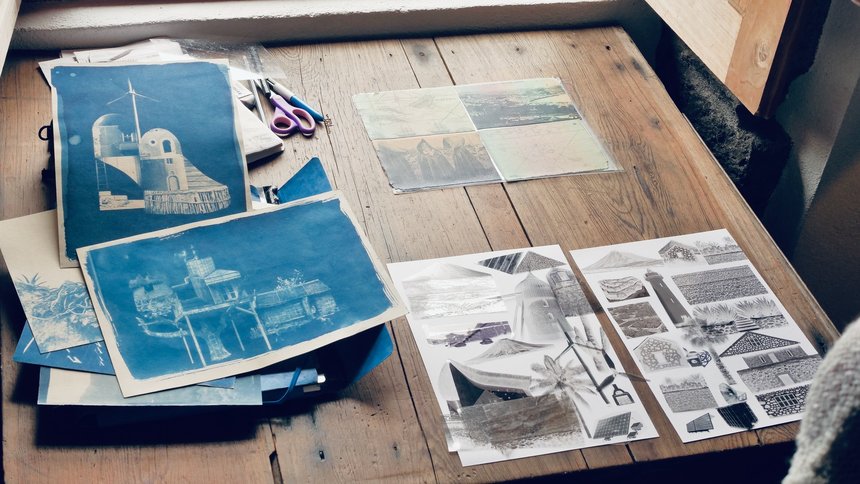
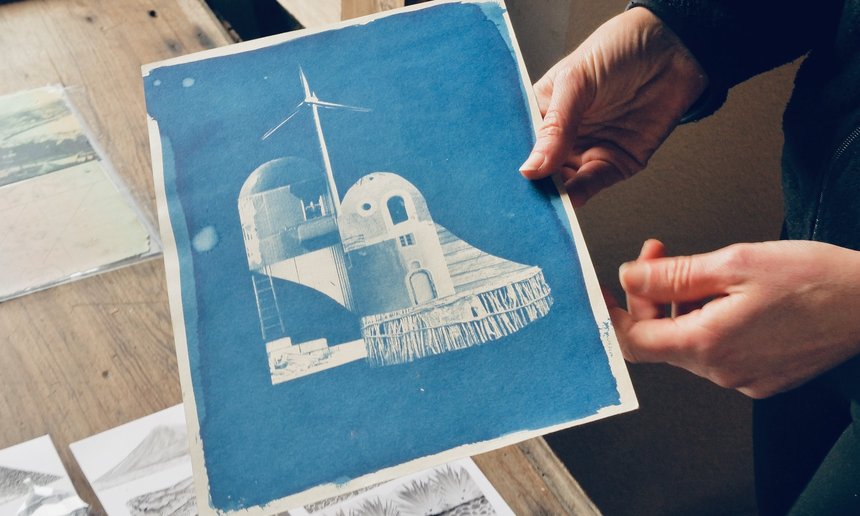
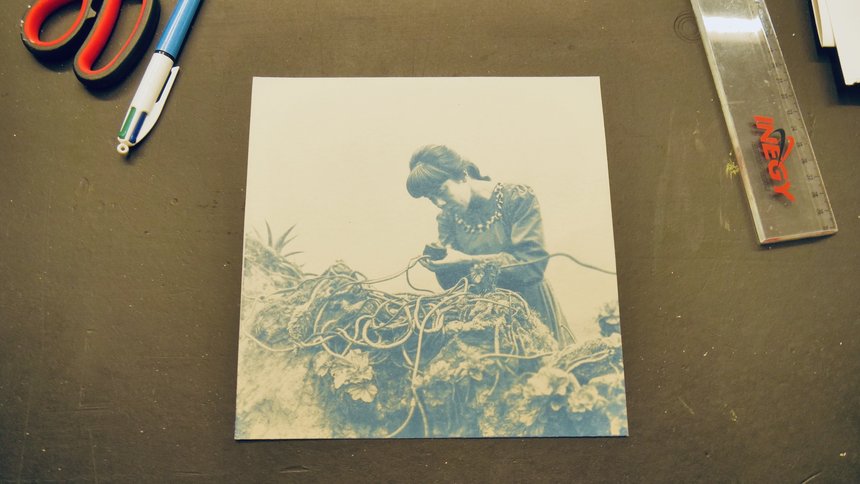
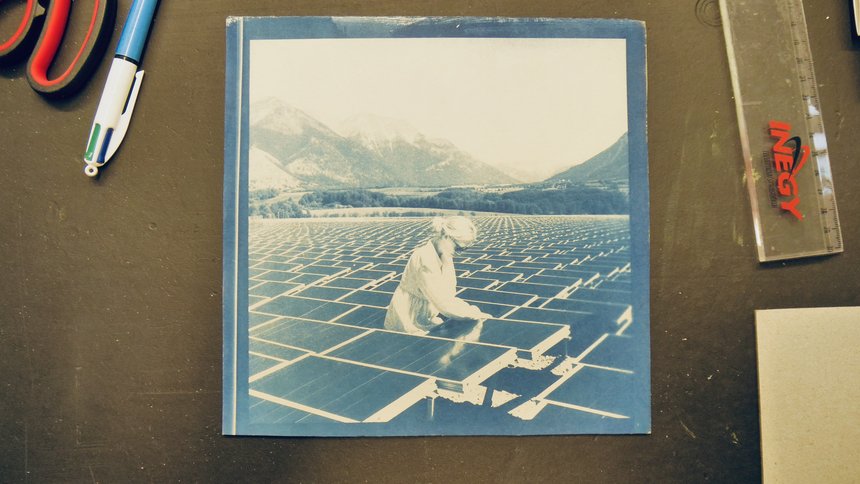
After the digital images were created, the cyanotype printing phase began. Cyanotype is one of the earliest photographic techniques, using a chemical process to produce deep blue prints, known as Prussian blue. Cyanotype, with its poetic touch, was also a historical tool in architecture, used to duplicate construction plans, and is now reappropriated for the creation of new images that link the past and the future.
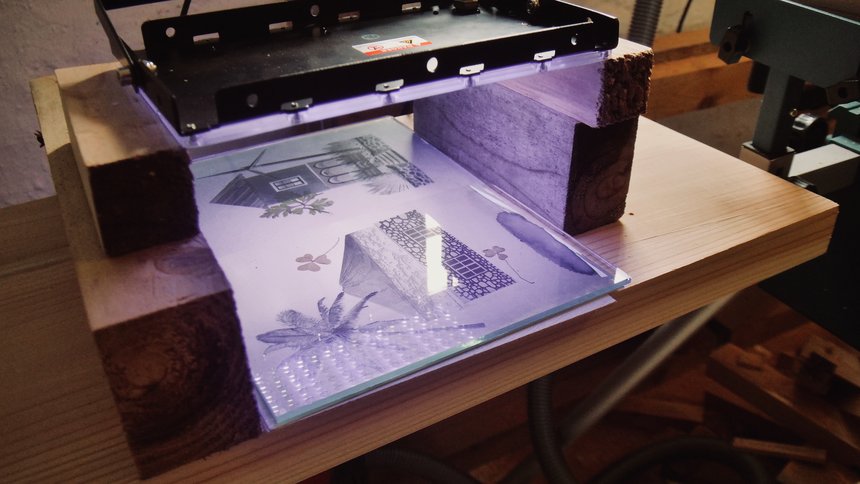
During the process, the images are manipulated to create modular geometric shapes using old and current photographs of the island. Analog montage, involving manual cuts and negative edits, gave way to digital creation, where participants used programs such as Scribus or InDesign to compose their ideas. Artificial intelligence is introduced as a creative tool, stimulating new design possibilities while adhering to ethical guidelines to avoid stereotypes.
At the end of the workshop, the creations were printed on negatives and, following all the steps of the cyanotype process, were solarized onto photosensitive paper, resulting in unique images that capture both the spirit of tradition and technological innovation.