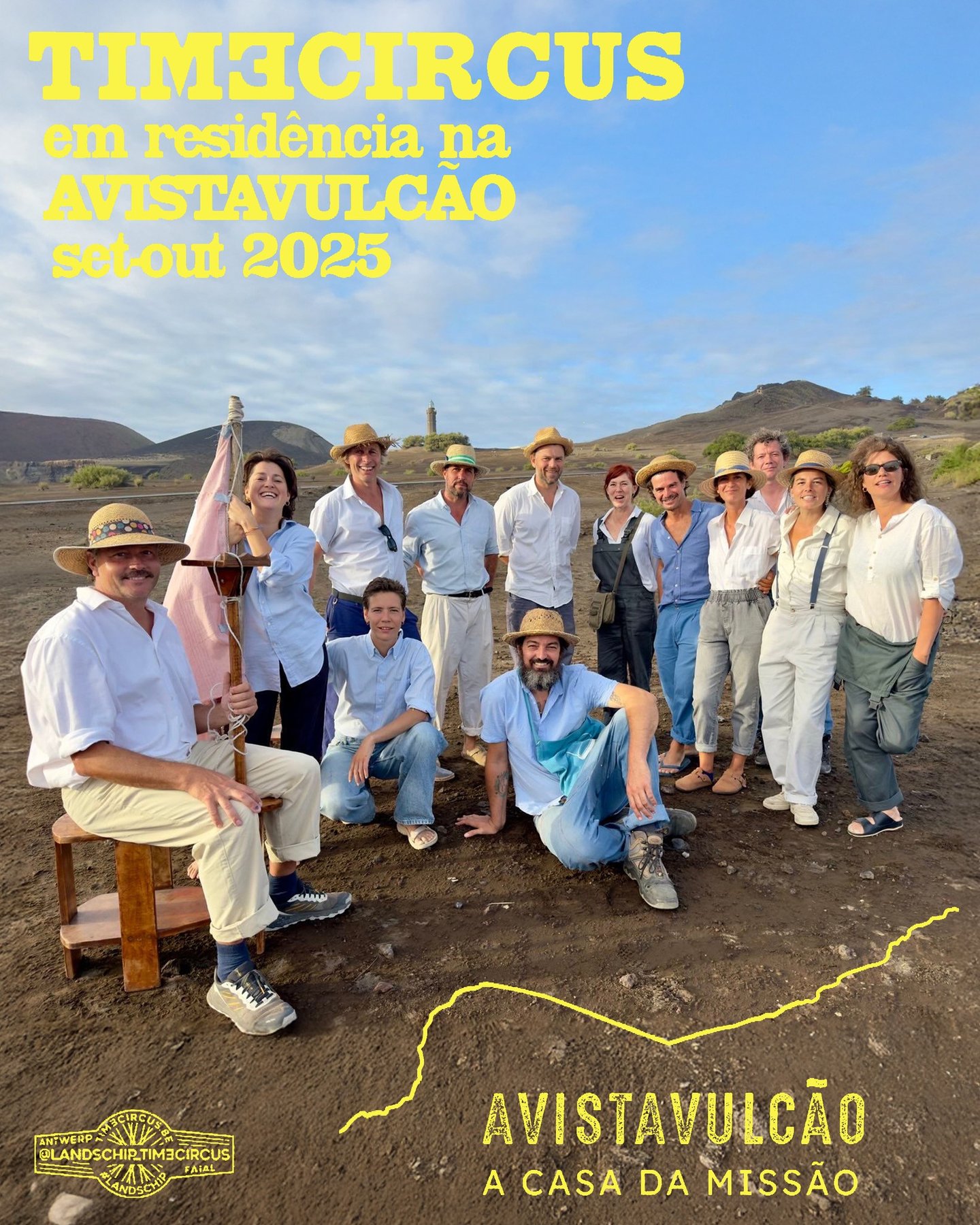
2025
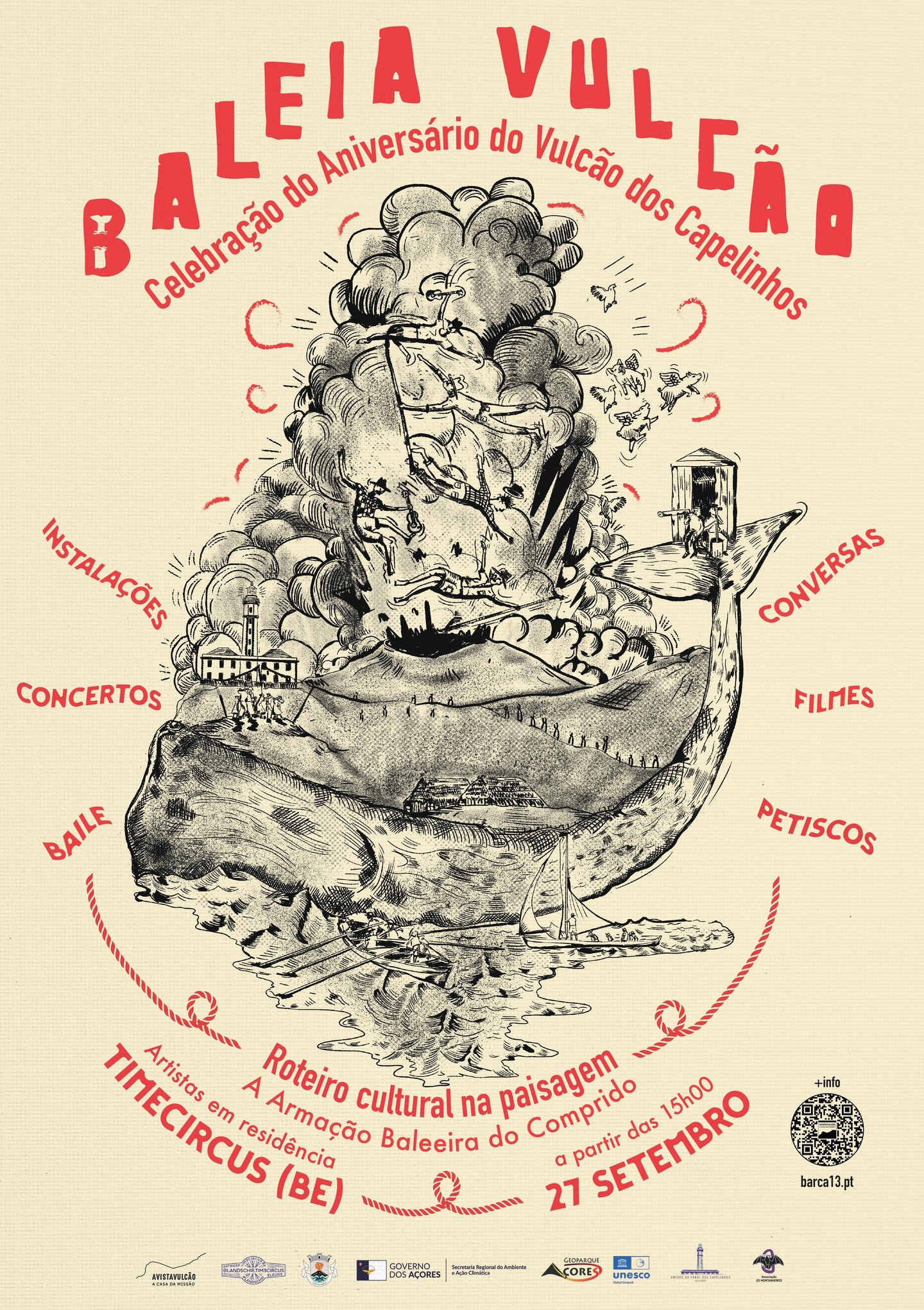
68th Anniversary of the Capelinhos Volcano Eruption – 27 September 2025
Cultural Tour along the Whalers’ Trail
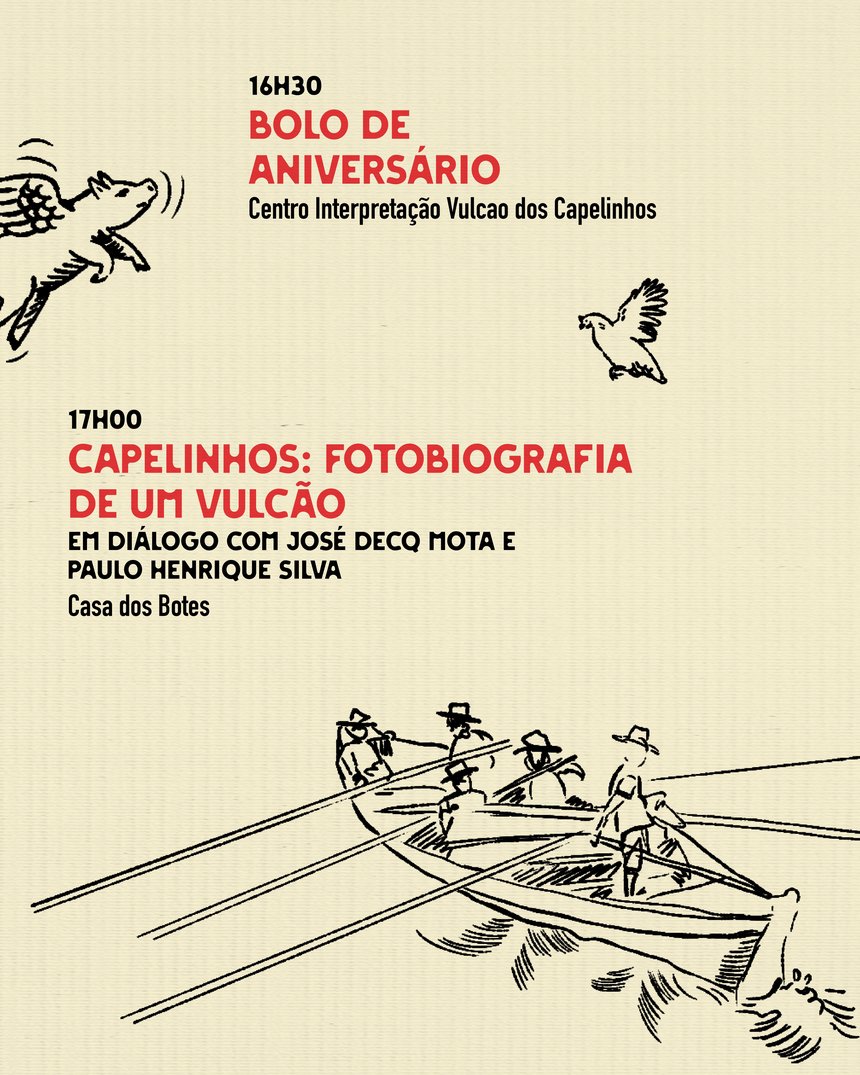
This year’s programme focused on the history of the Porto do Comprido Whaling Station, recalling and reviving the memories of the whalers and their families, who came from various islands in the Azores and lived and worked there until 1957, shortly before the eruption that transformed this landscape forever.
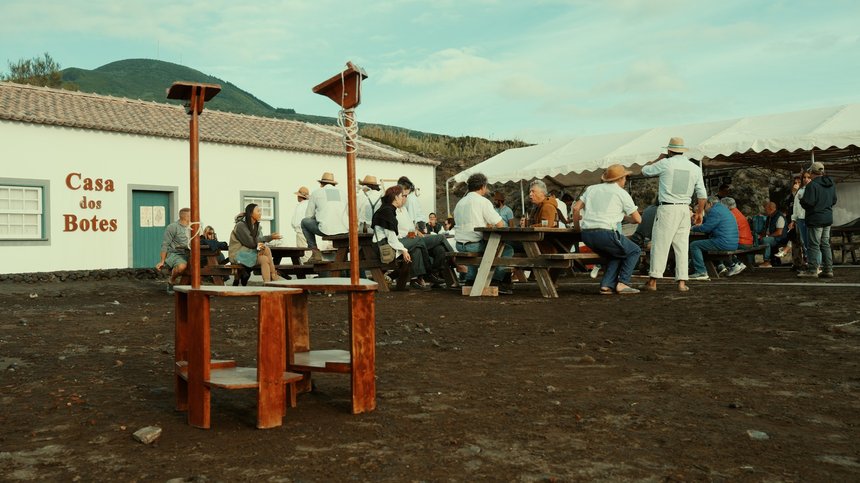
Inspired by this island migration, participants embarked on a cultural walking tour, following the Whalers’ Trail, which begins at the Vigia do Costado da Nau and ends at the Casa dos Botes. Along the route, there were art installations, concerts, film screenings and exhibitions.
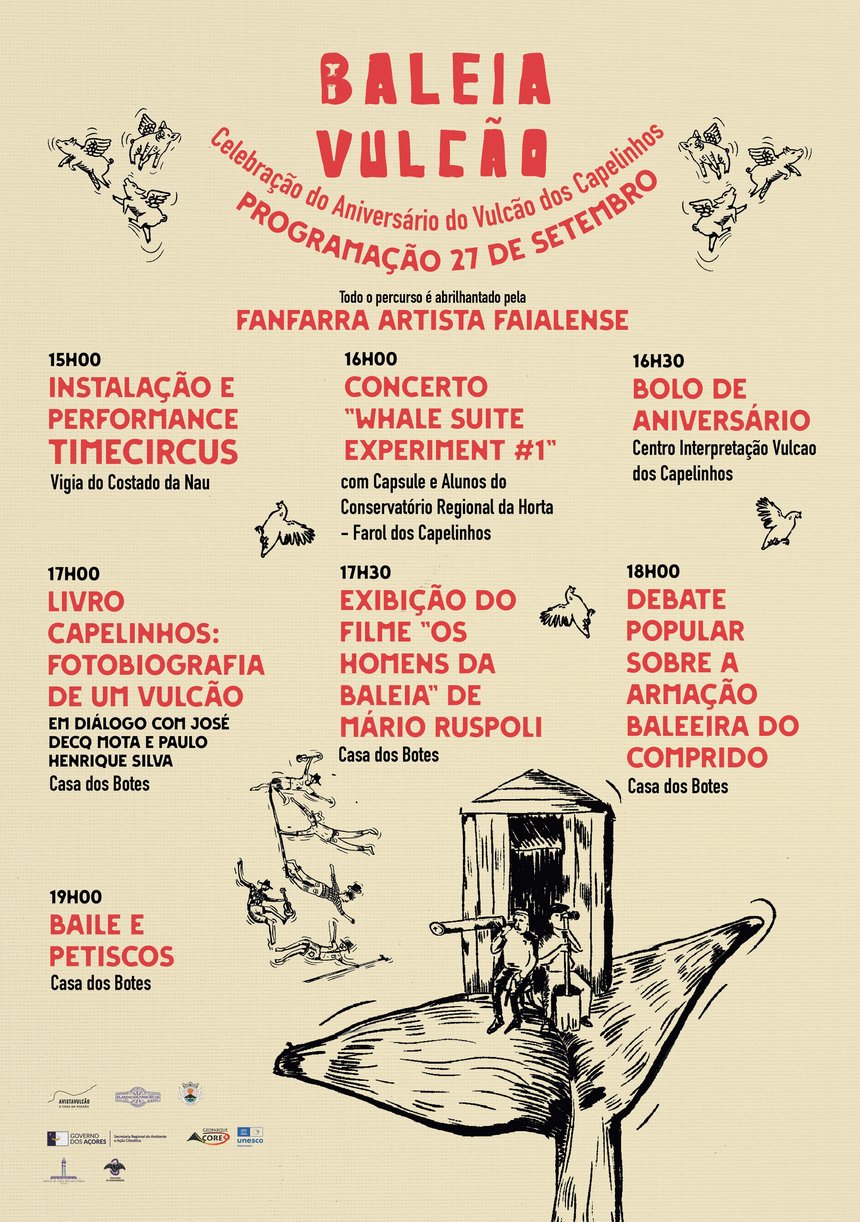
Highlights this year included:
Artistic installations, structures and performances by the Belgian collective TIMECIRCUS
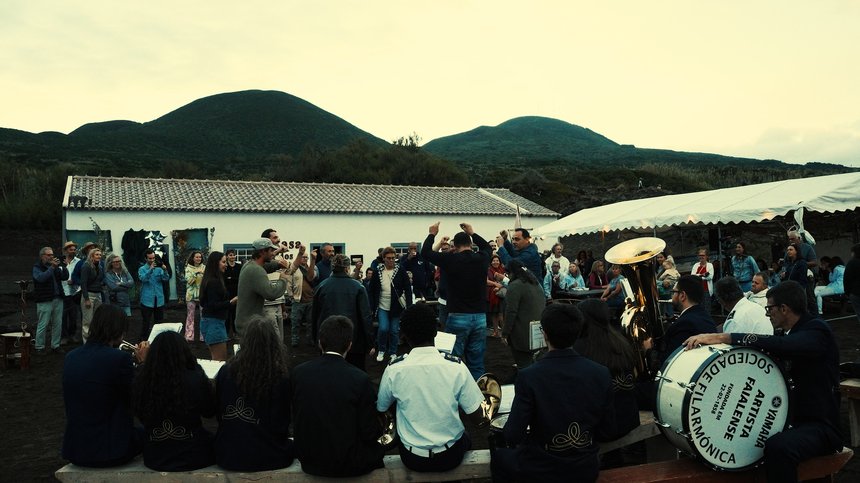
A performance by the Fanfarra Artista Faialense, who will accompany walkers along the entire route
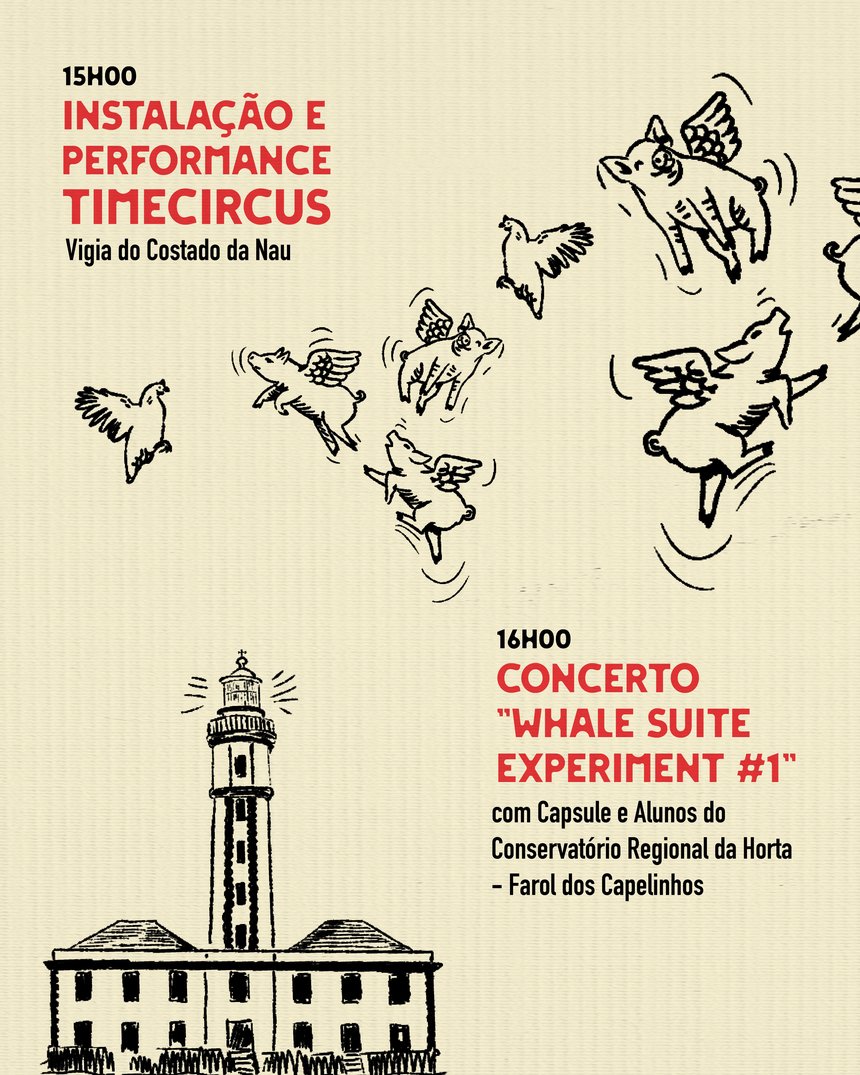
A string concert at the Capelinhos Lighthouse, featuring the world premiere of the piece “Whale Suite”, composed by Florence Henry and Saar Van de Lest, in collaboration with musicians from the Horta Regional Conservatory;
The launch of the book “Capelinhos: Photobiography of a Volcano”, with images by Luís Decq Mota and José Agostinho;
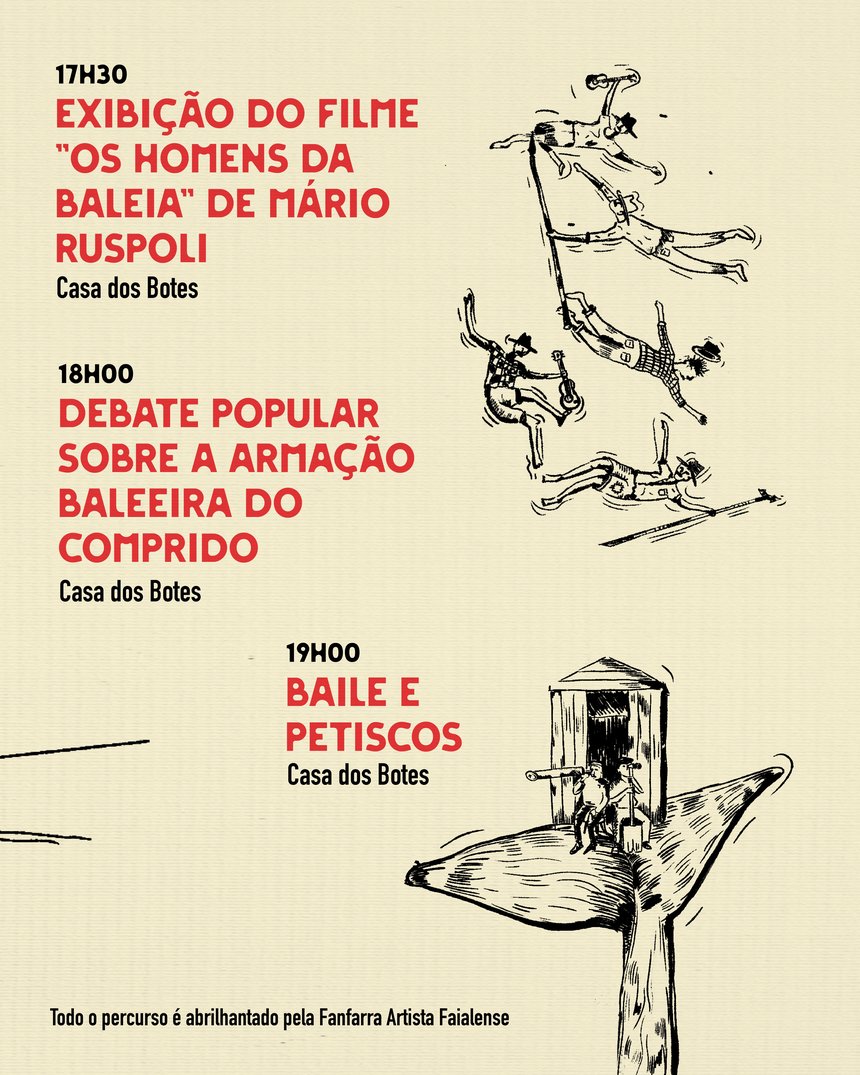
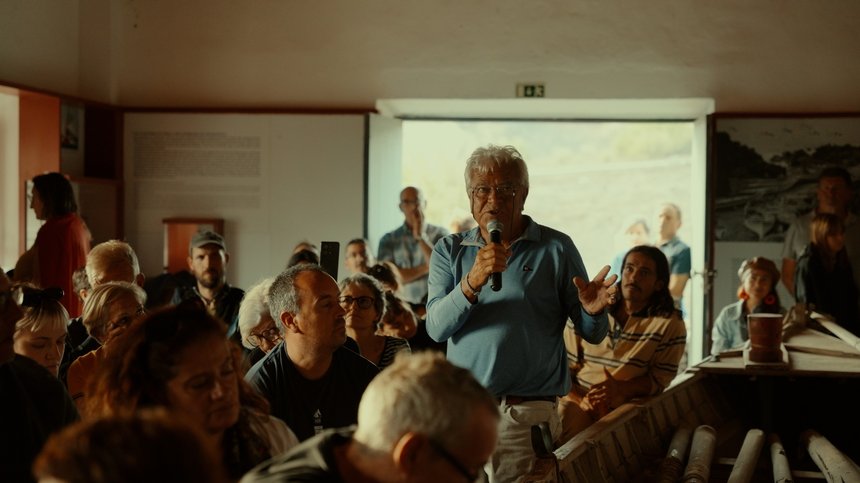
A screening of the iconic film “Os Homens da Baleia” by Mário Ruspoli, filmed in 1956, which depicts daily life in the whaling village before the eruption, followed by a community discussion.
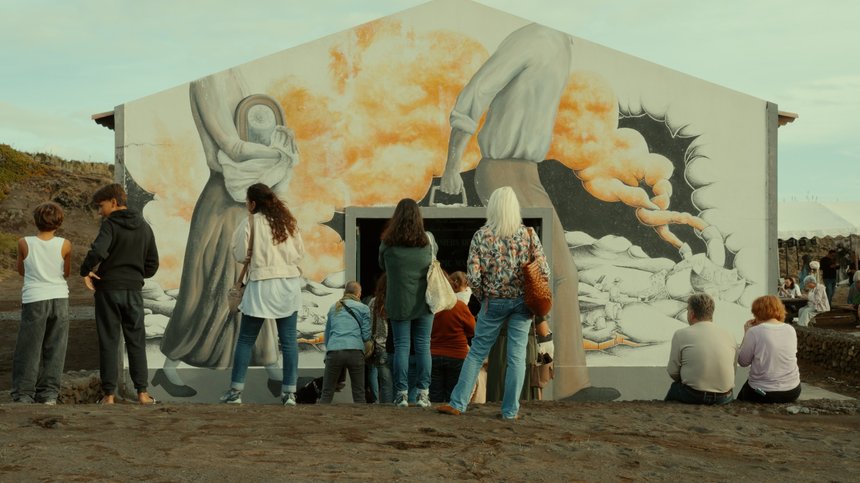
And also an exhibition at Casa dos Botes, fish broth, snacks and dancing to round off the celebrations.
Celebrating the historic Whaling Harbour of Porto do Comprido.
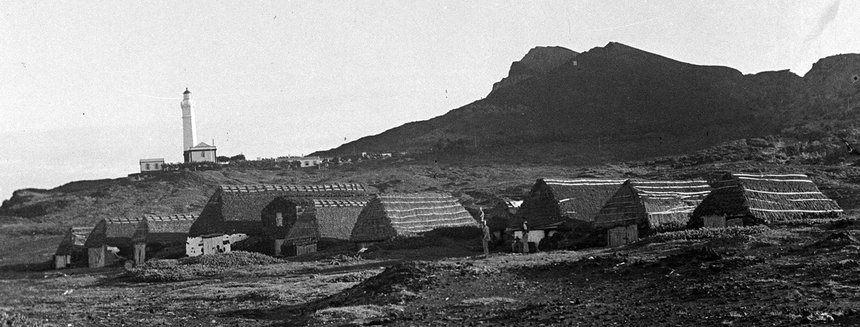
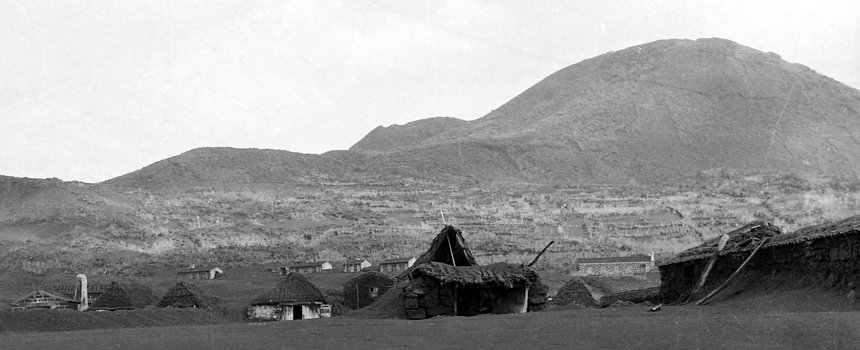
"The Whaling Harbour of Capelinhos, situated at the western tip of Faial, was for decades a vital hub for whaling in the Azores. Protected by cliffs and formed by an ancient lava flow, this harbour was home to over 200 people during the spring and summer months, who came from various islands – a unique case of inter-island transhumance in the Azores – with 21 boats, 7 motorboats, support huts, warehouses and even a small bar.
Armação Baleeira was active between 1884 and 1957, the year in which the volcano erupted and forced the abrupt abandonment of the site. Since then, many of these memories have been buried beneath the volcano’s ashes." in Casa dos Botes, Capelo
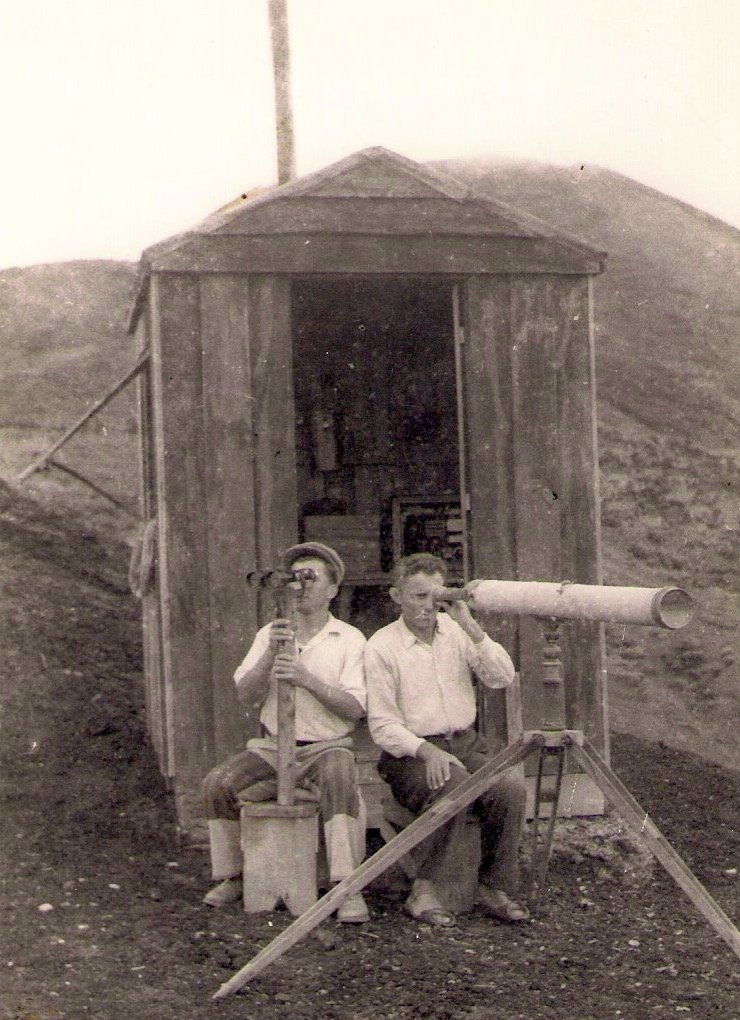
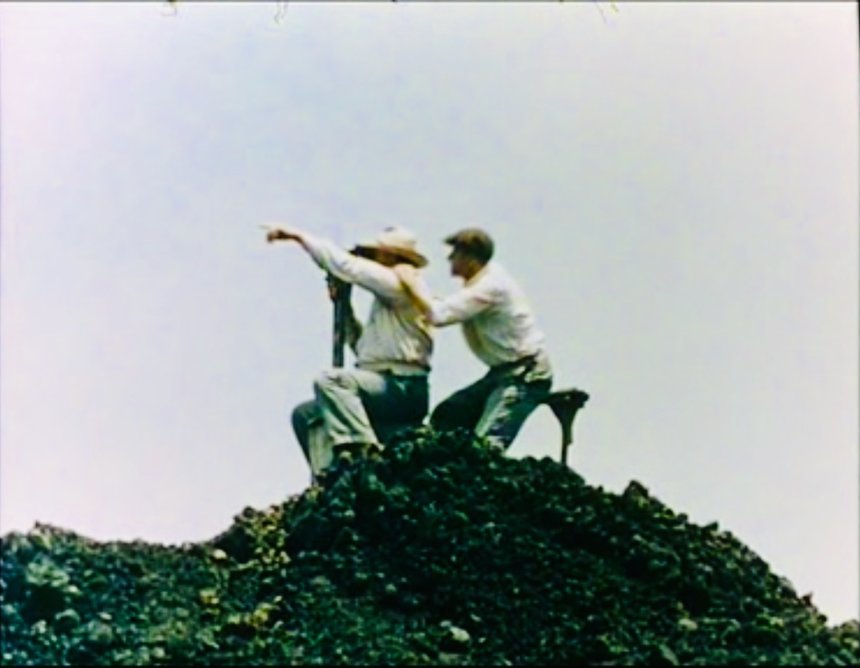
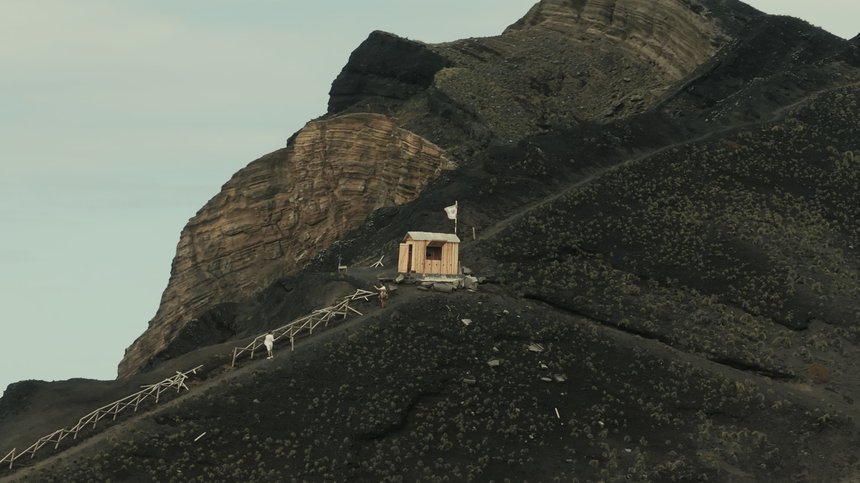
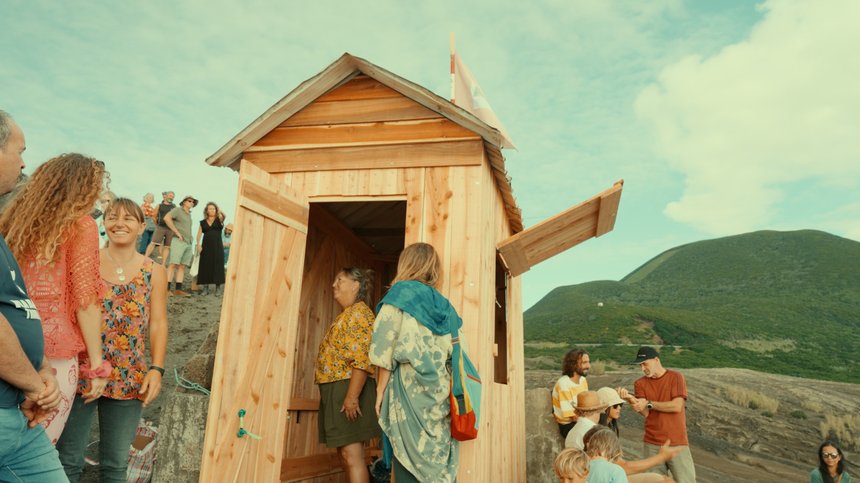
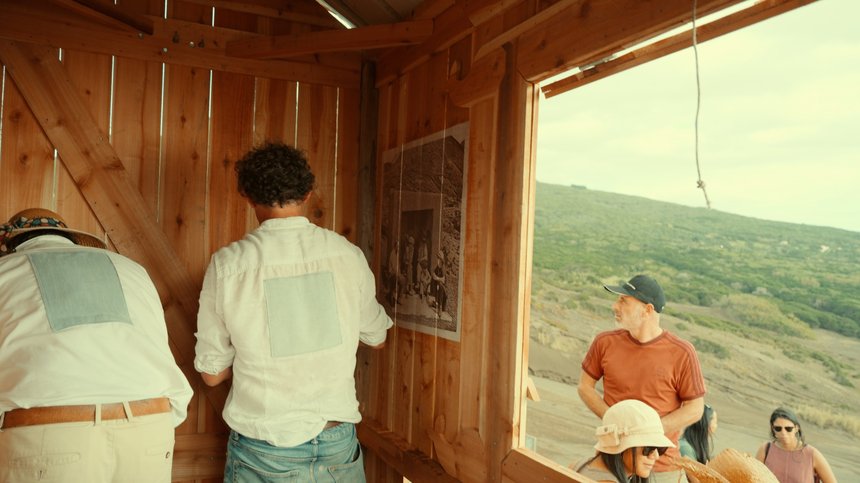
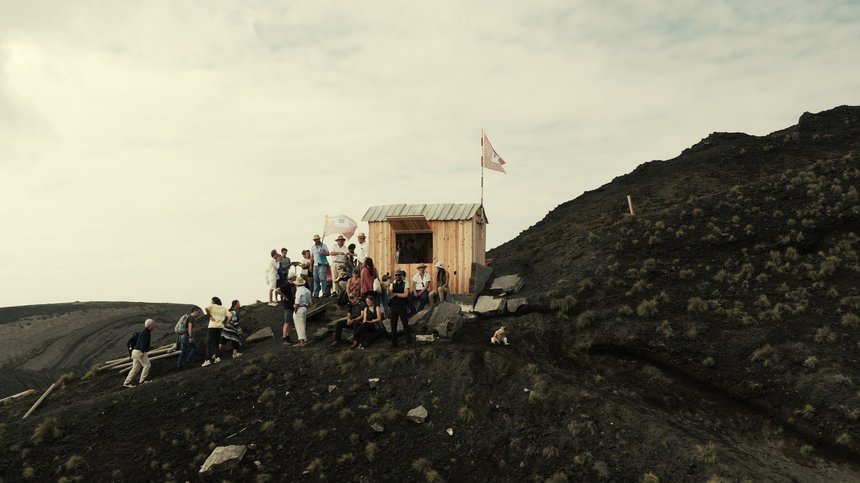
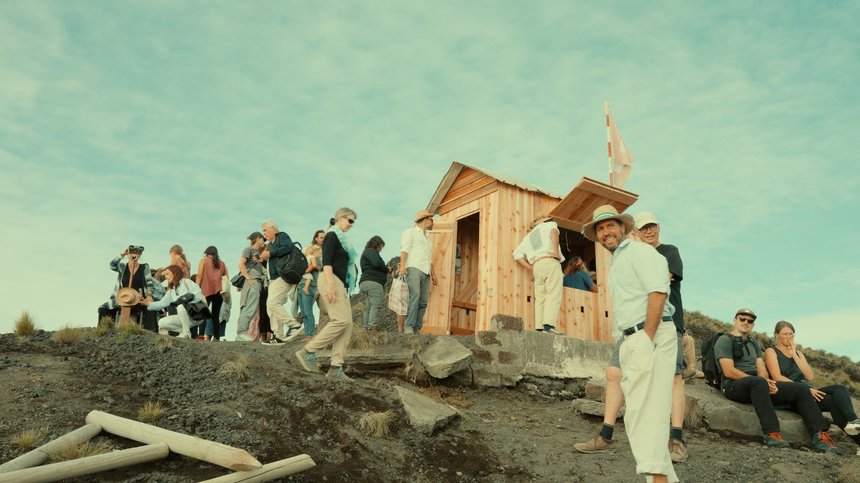
On 27 September 2025, the Costado da Nau watchtower rose from the ashes thanks to the artists-in-residence at TIMECIRCUS.
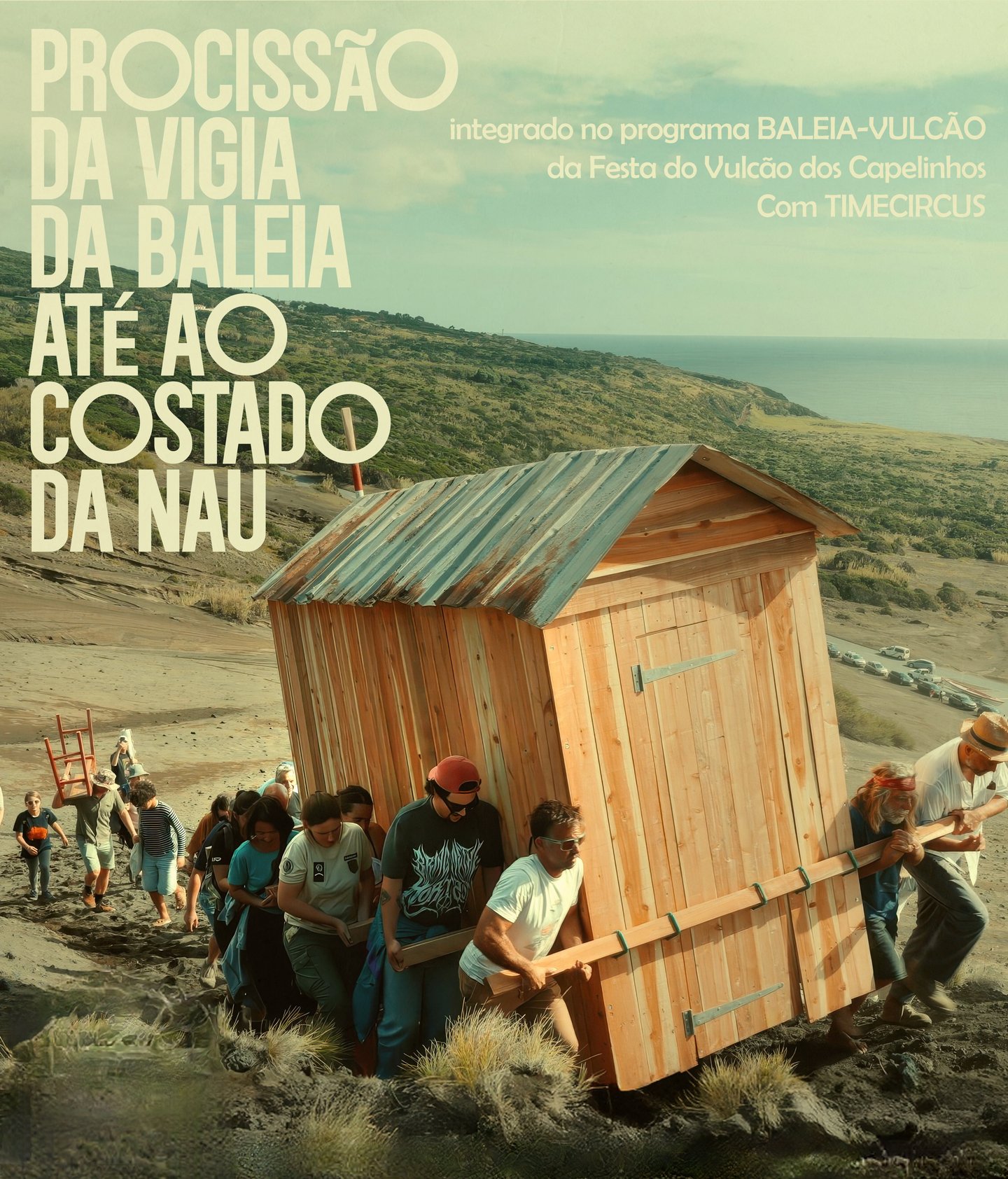
ANATOMY OF A WHALE WATCHER IN MOTION
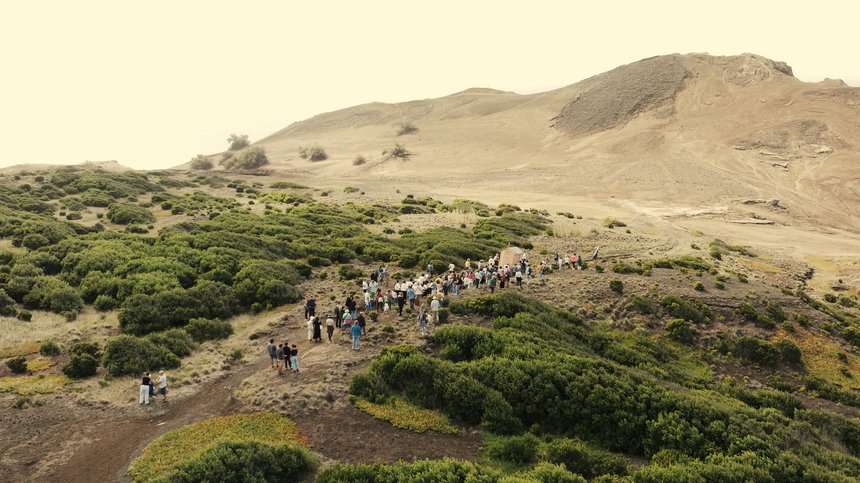
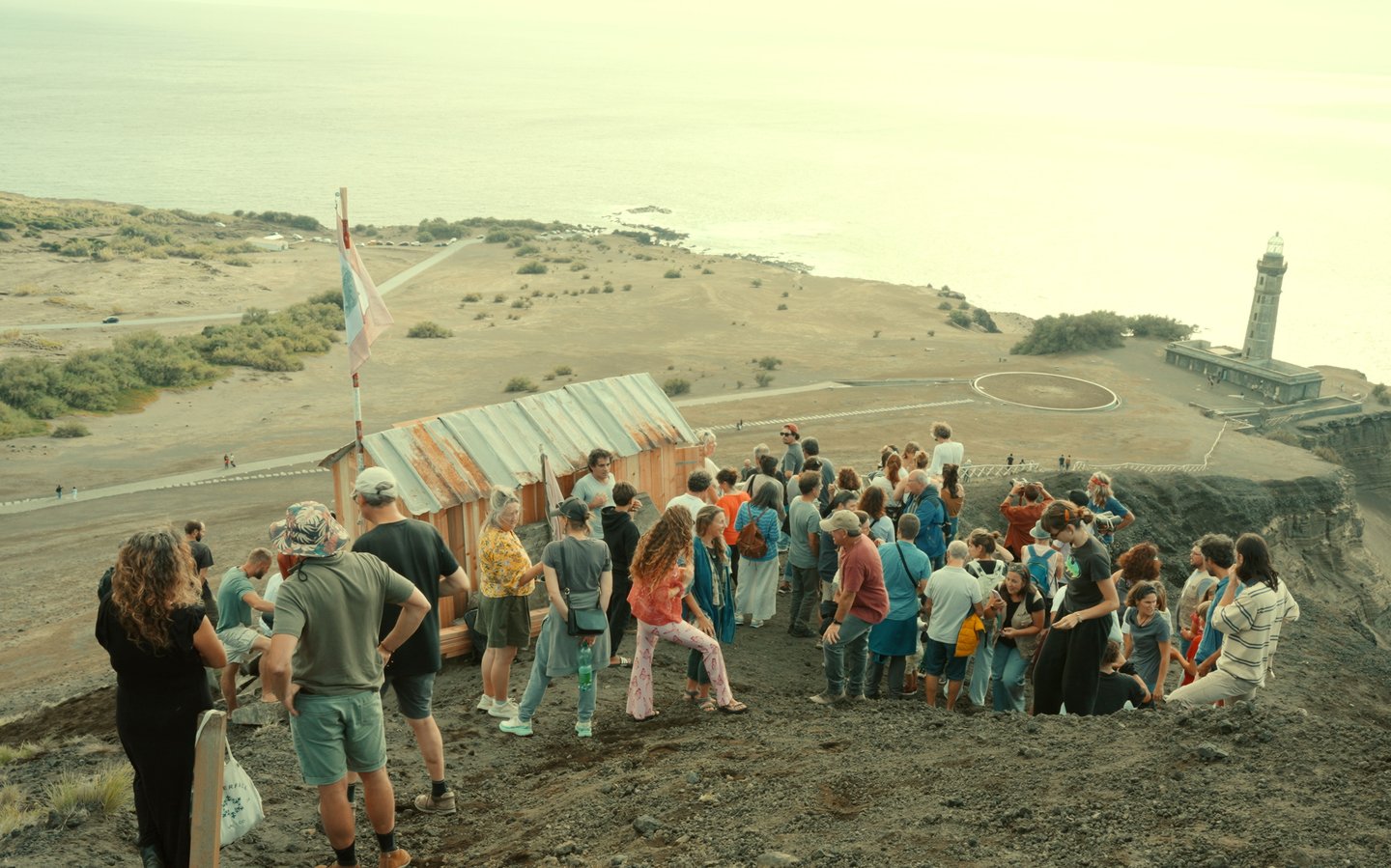
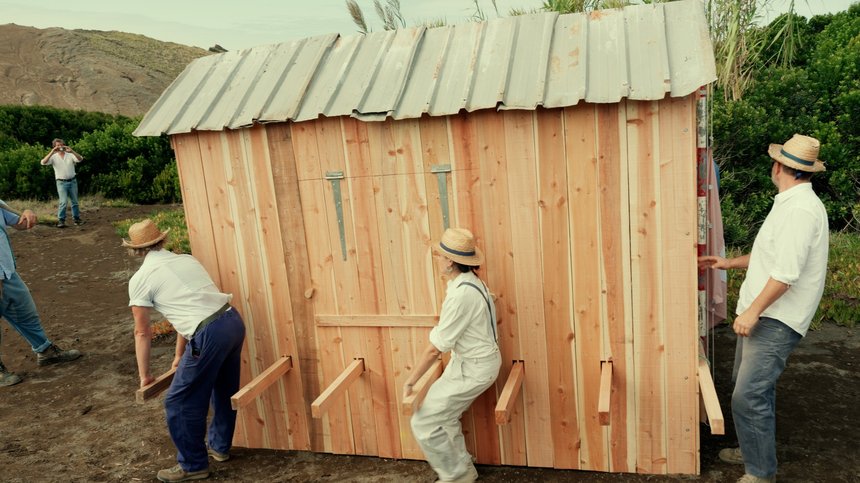
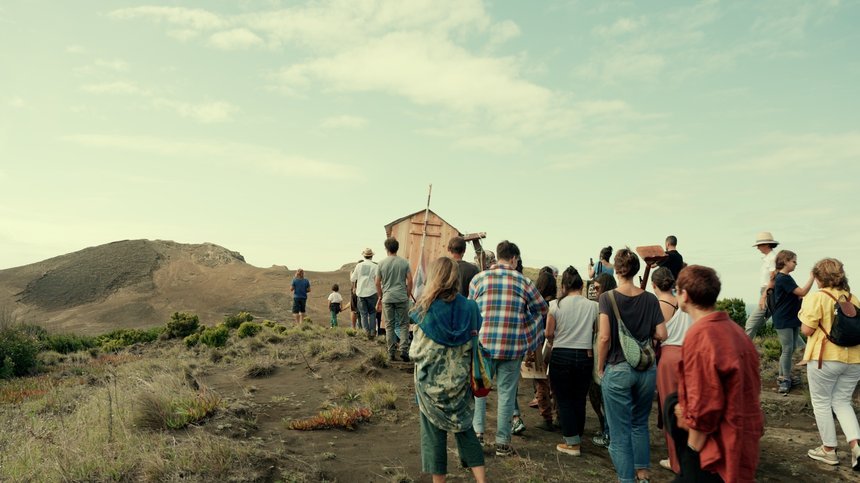
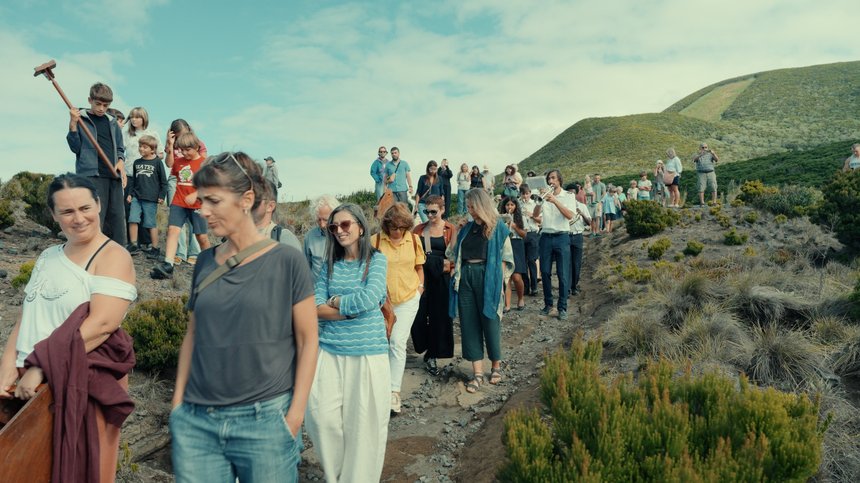
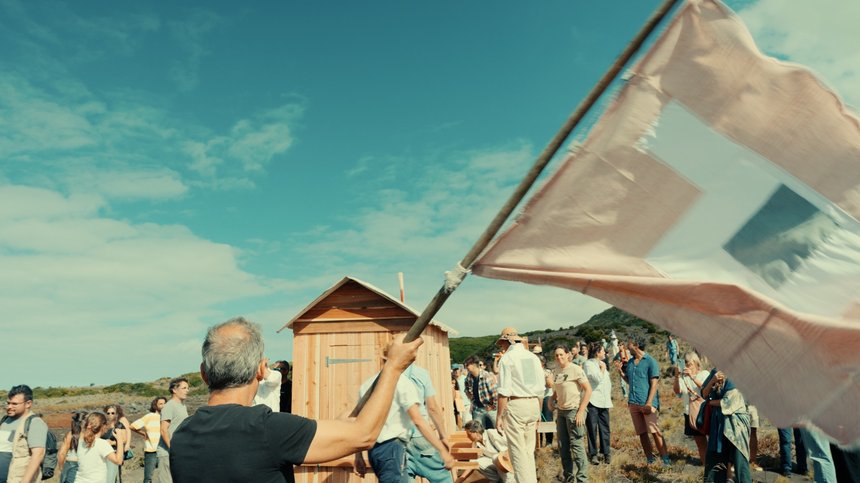
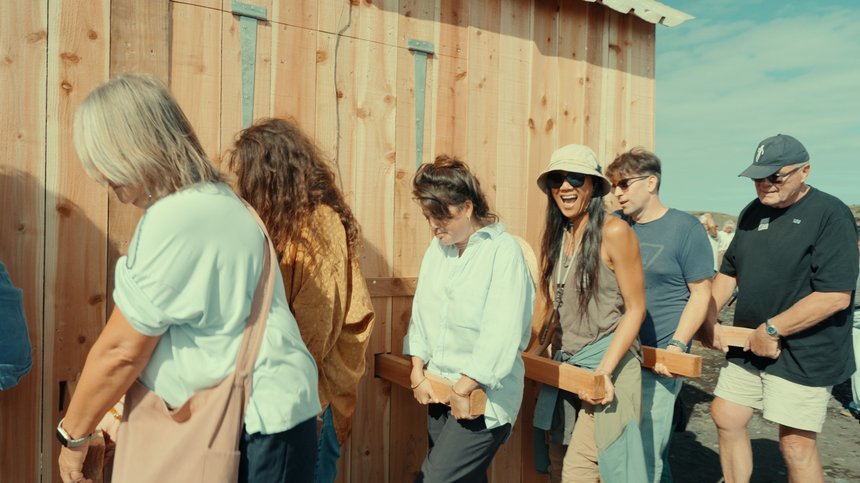
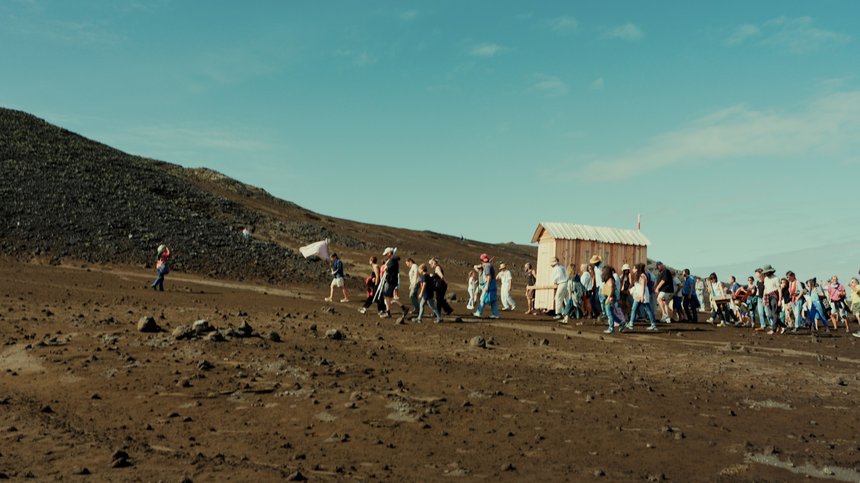
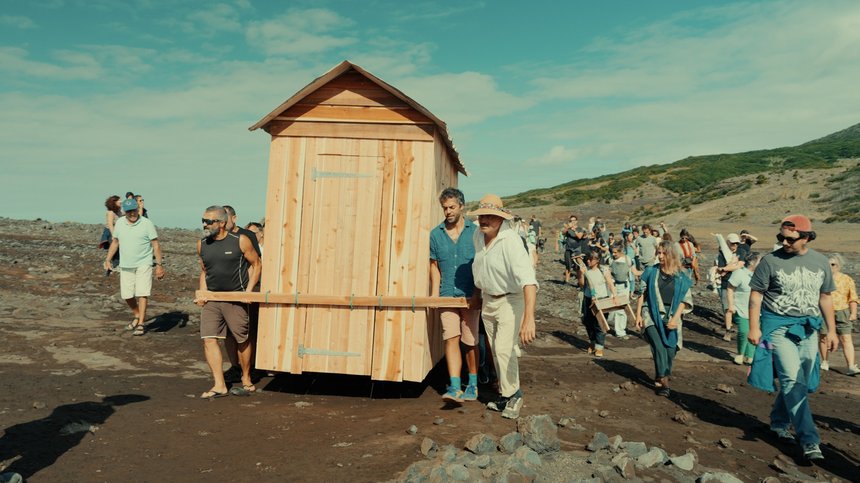
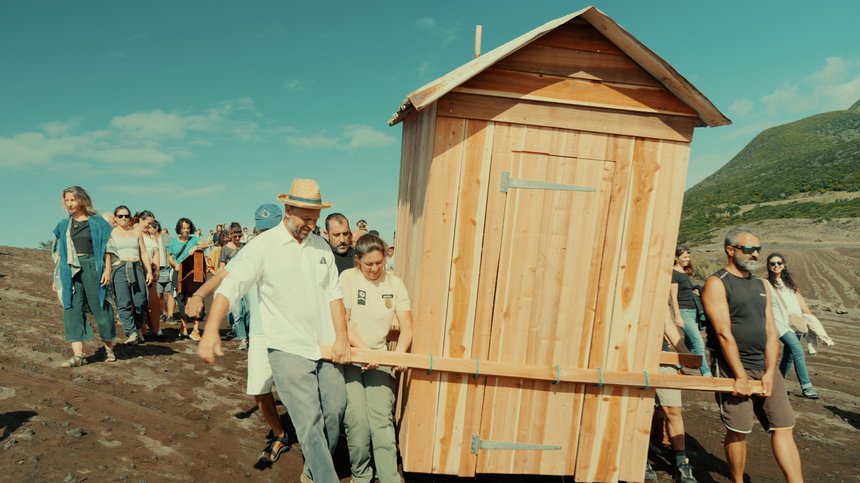
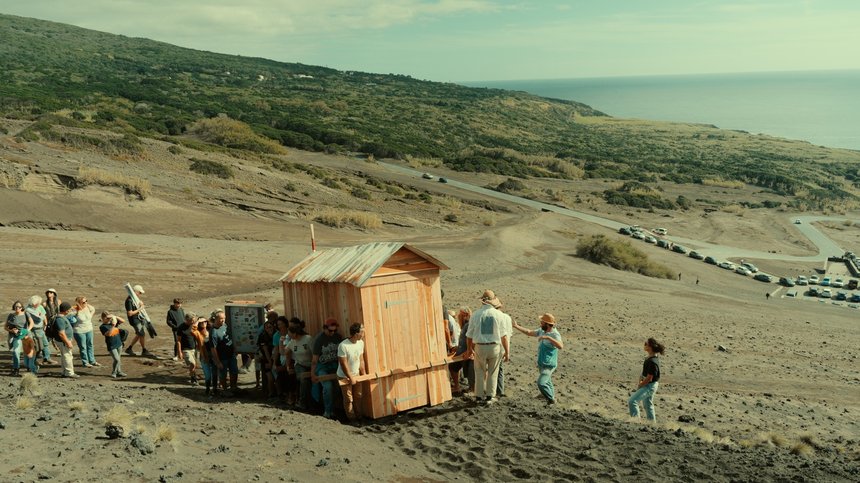
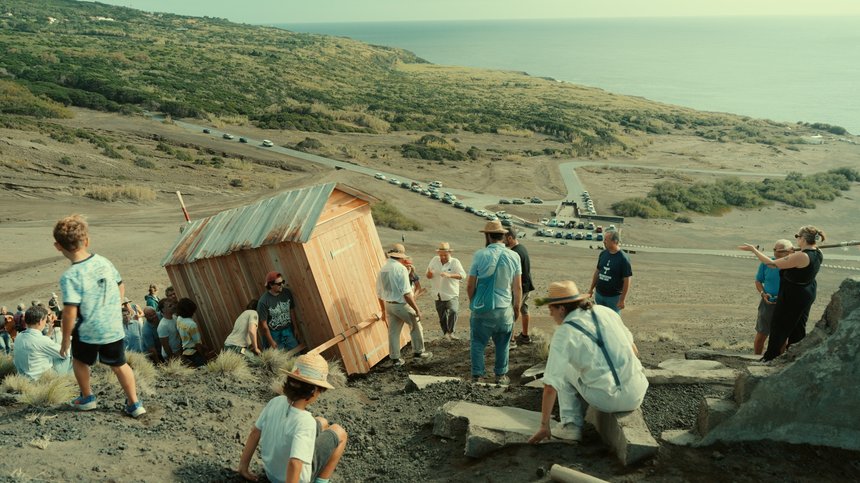
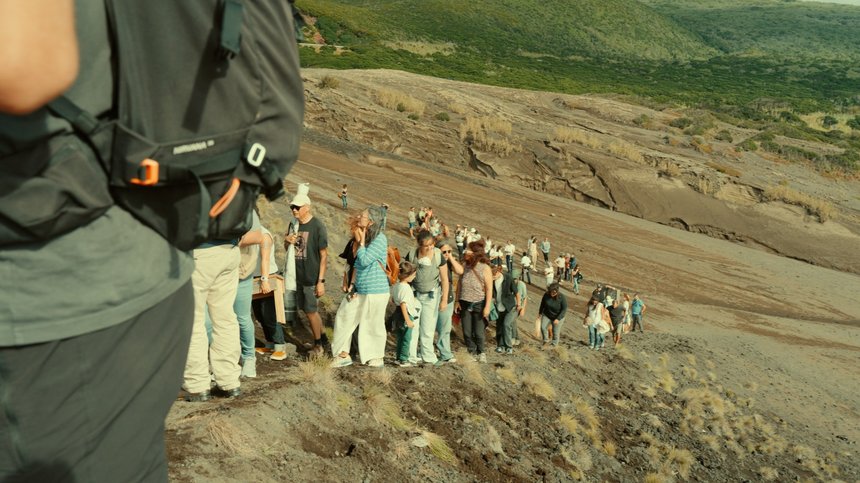
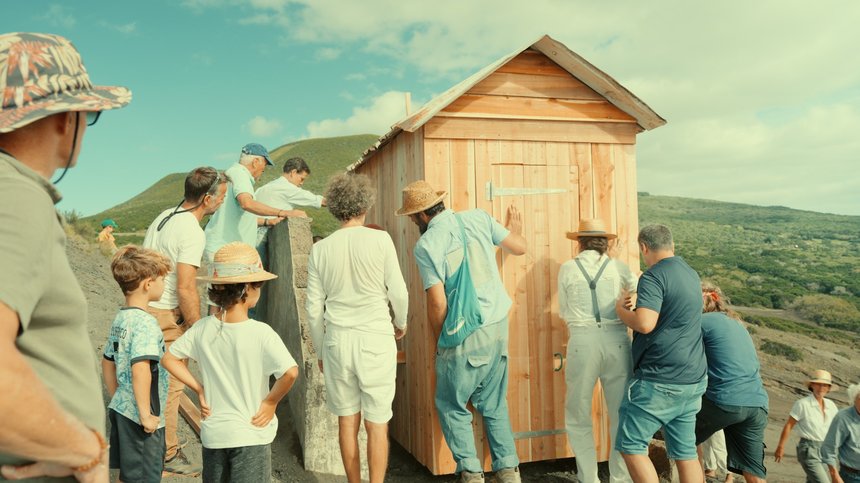
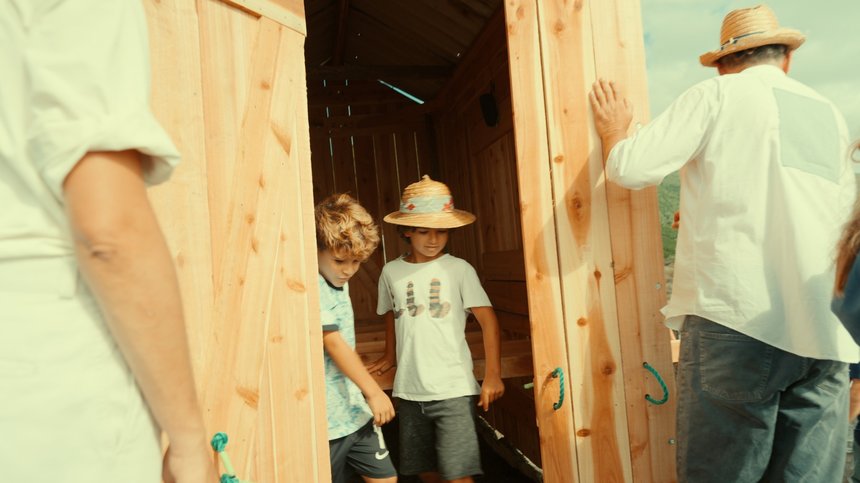
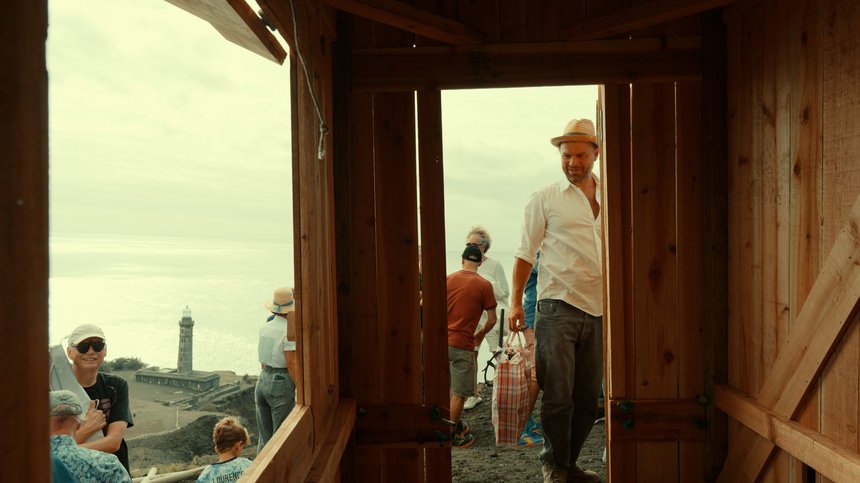
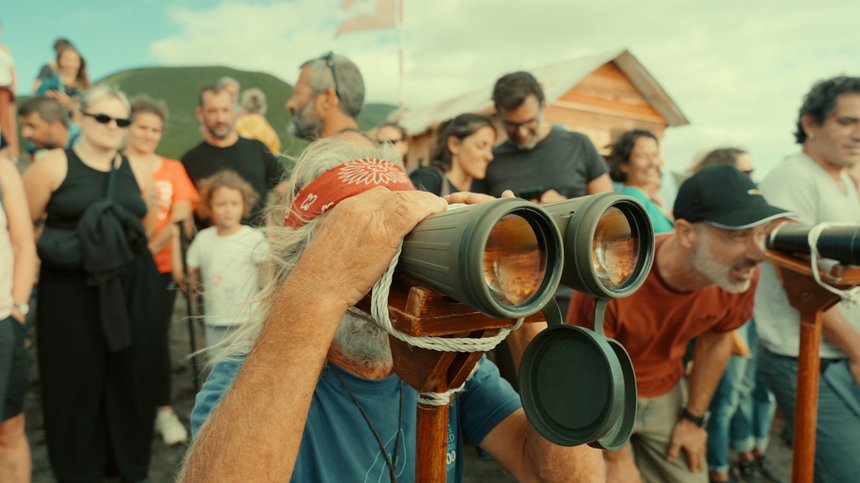
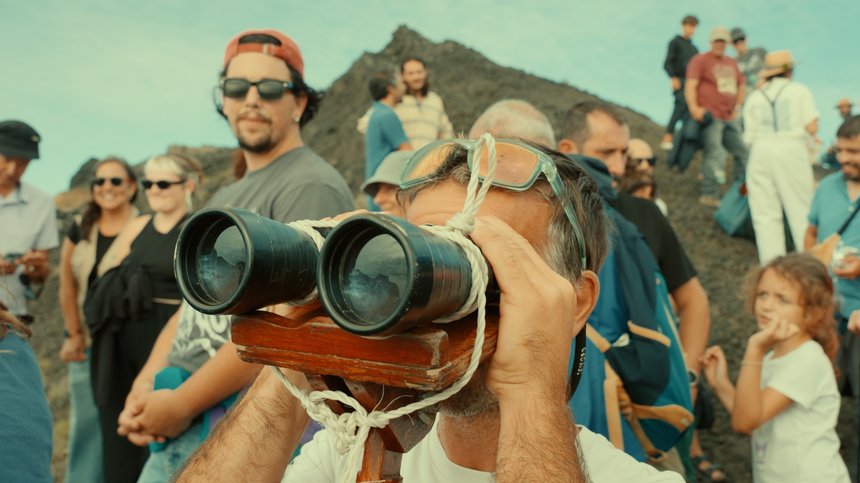
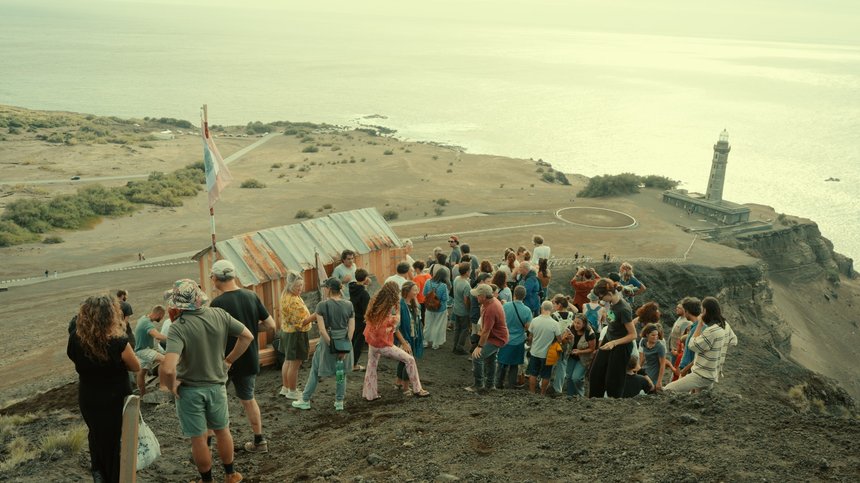
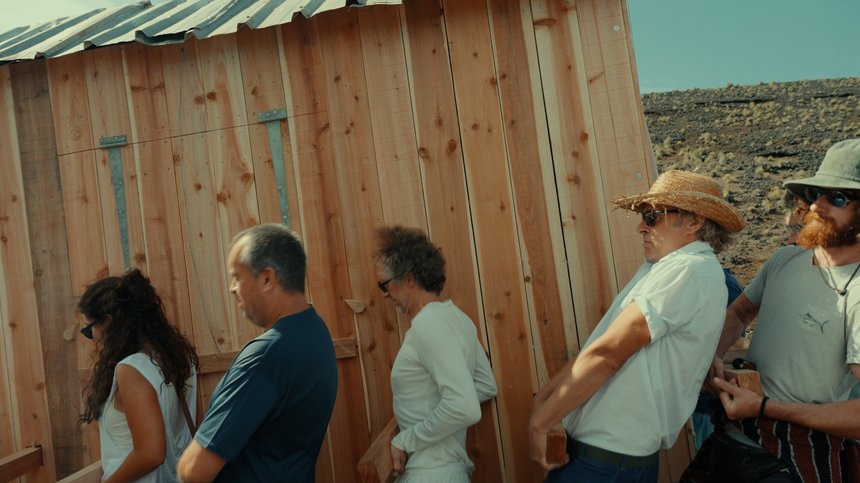
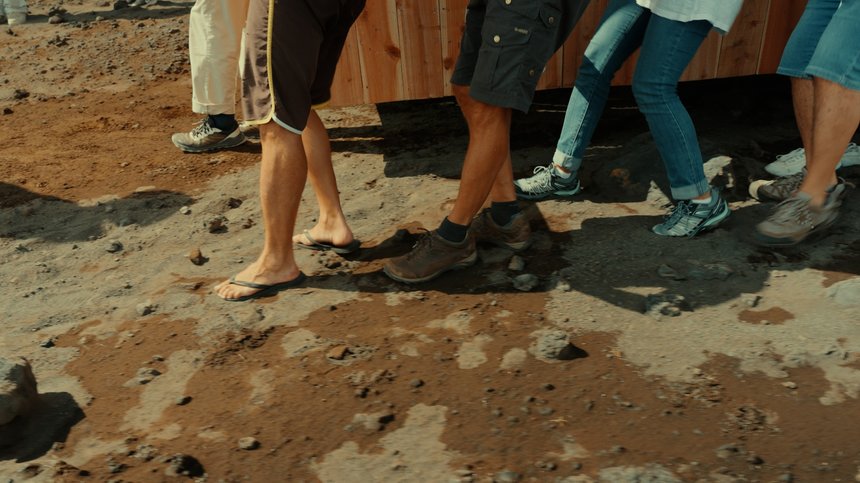
On the afternoon of 27 September 2025, the anniversary of the Capelinhos Volcano eruption, over a hundred people gathered to carry a replica of the legendary Whale Watch from Costado da Nau, which had to be moved from its original site and never returned due to the Capelinhos undersea eruption.
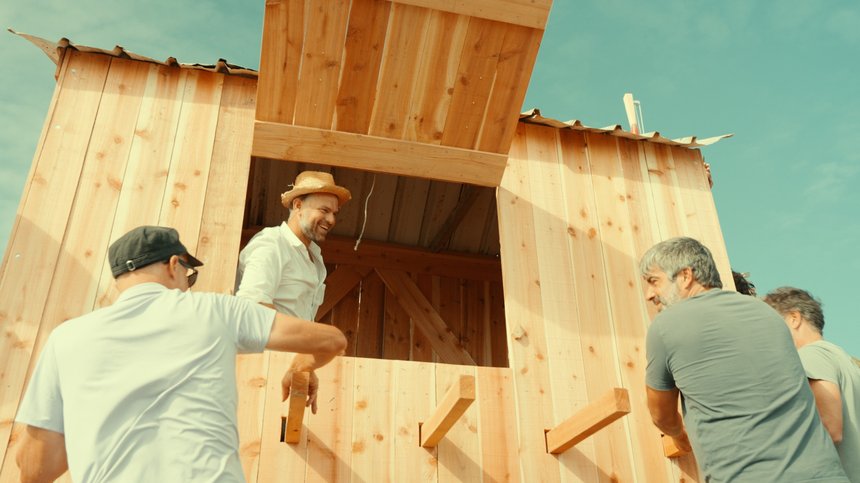
Sixty-eight years later, the Whale Watch returned to its place, carried by the symbolic children of those Azorean whalers, in a collective act that brought the community together and was deeply symbolic. The TimeCircus collective, which built the structure, did not want it to be seen in its final place straight away, but rather for the public and participants to feel involved and engaged, together, in its reinstallation. In this process, in which we had to tire ourselves out and exert ourselves to carry it with our own hands, each of us was able to forge a personal connection with the new Whale Watchtower.
Ironically, it was from this very watchtower, up there where the island ended, that the first bubbling in the sea of a new volcano coming into being had been spotted...
A production: AvistaVulcão: A Casa da Missão with the colectivo TimeCircus e Artista Faialense em BALEIA VULCÃO | Festa de Aniversário Vulcão dos Capelinhos | Roteiro Cultural | 27 Setembro 2025.
Parceiros Freguesia Do Capelo, Ambiente Açores Cultura Açores, Azores Geopark, Parque Natural da Ilha do Faial, Amigos do Farol dos Capelinhos
Imagens Still de Florian Fischer e Gonçalo Tocha, powered by Behind the Mask
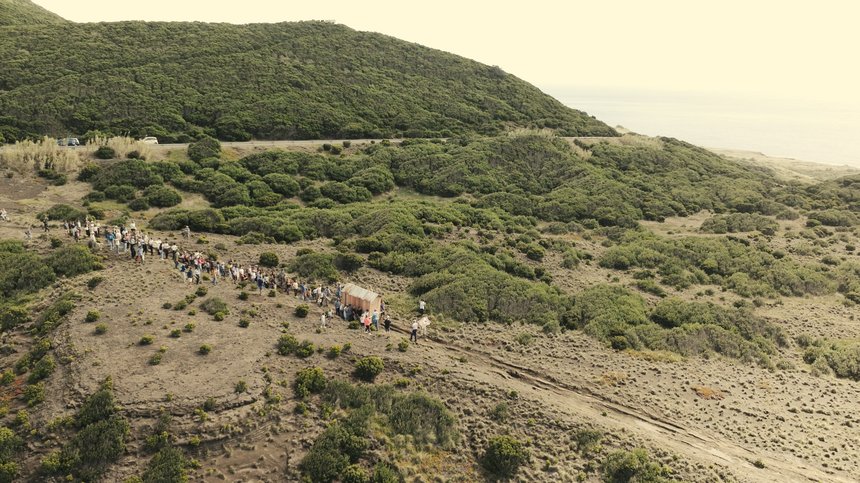
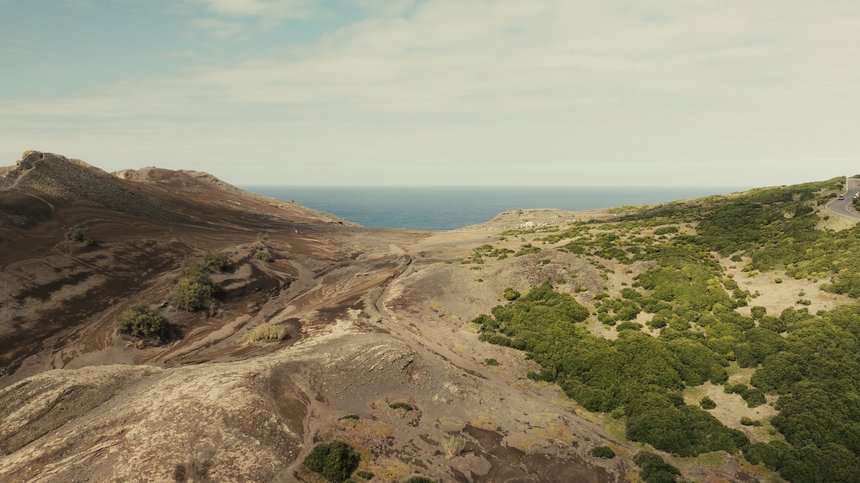
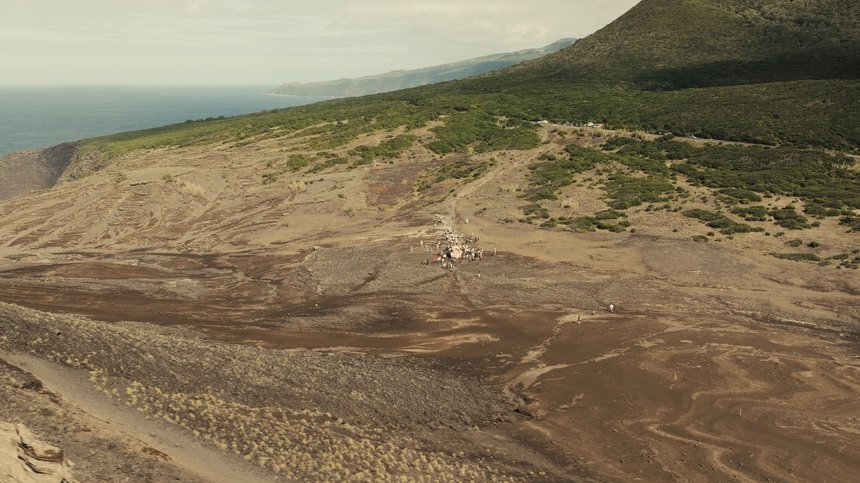
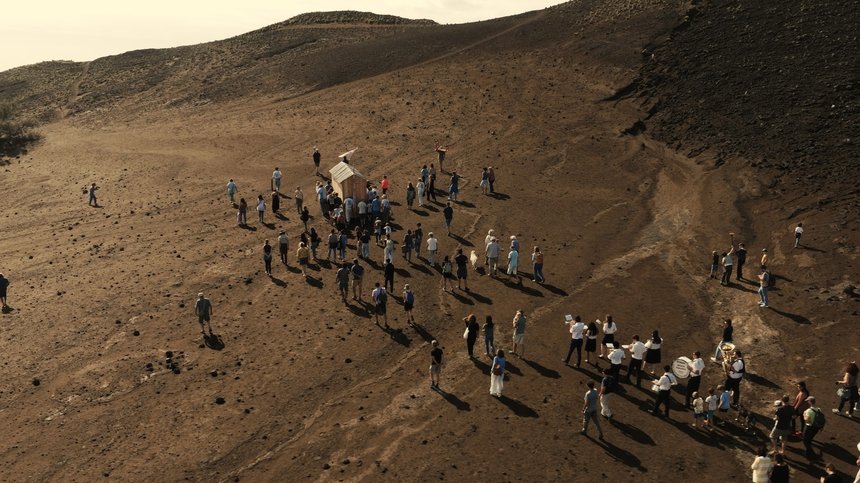
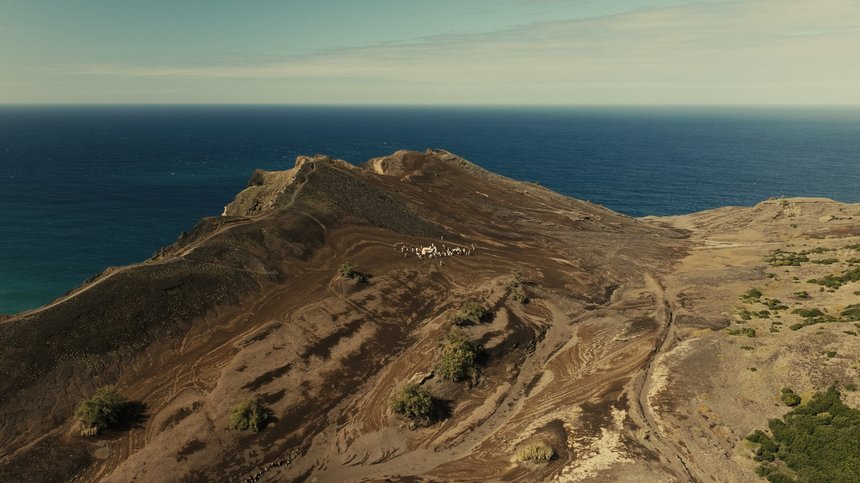
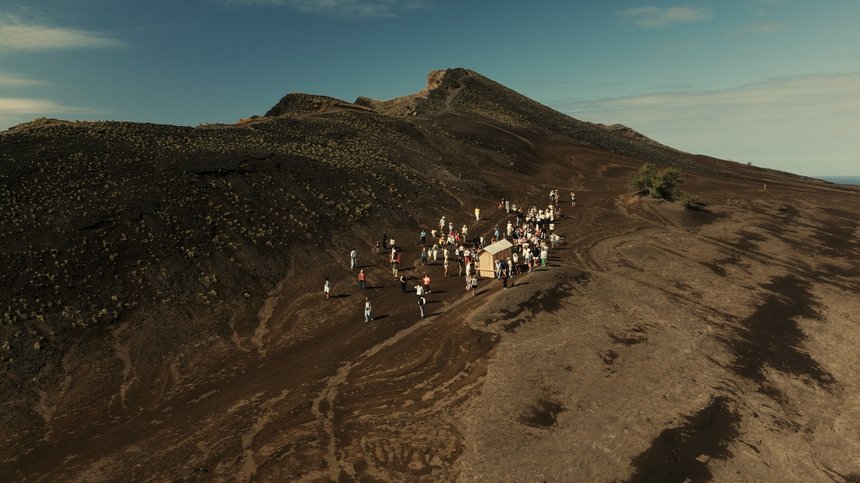
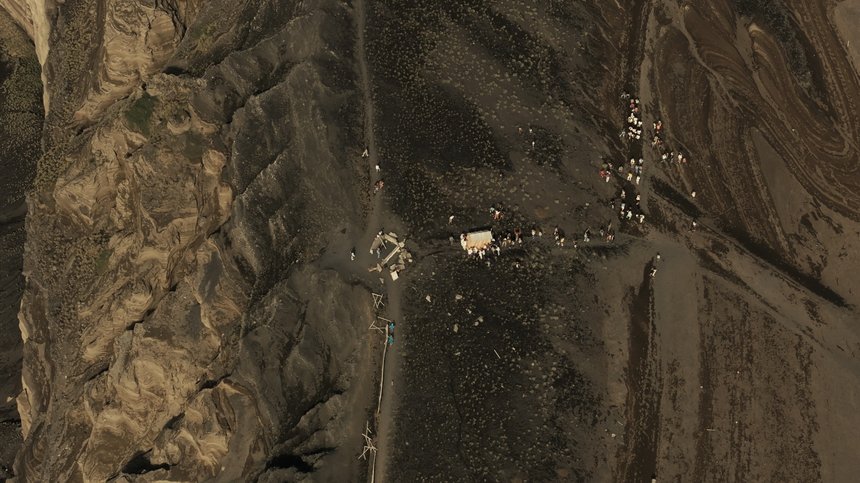
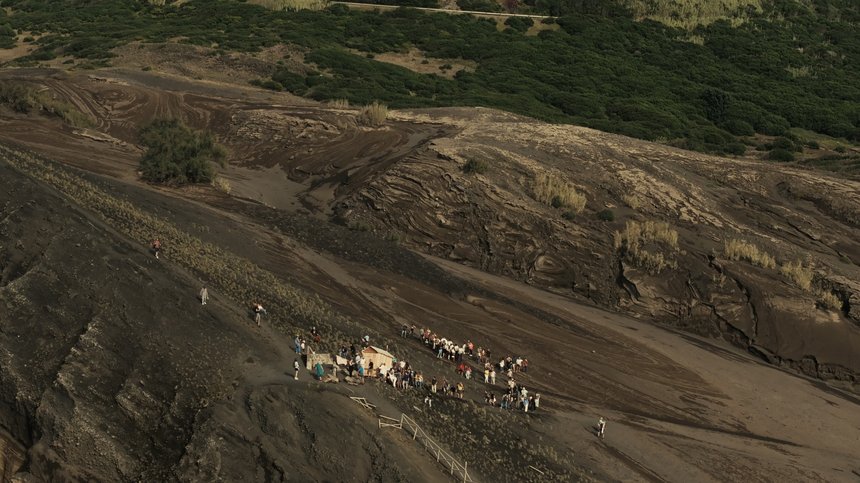
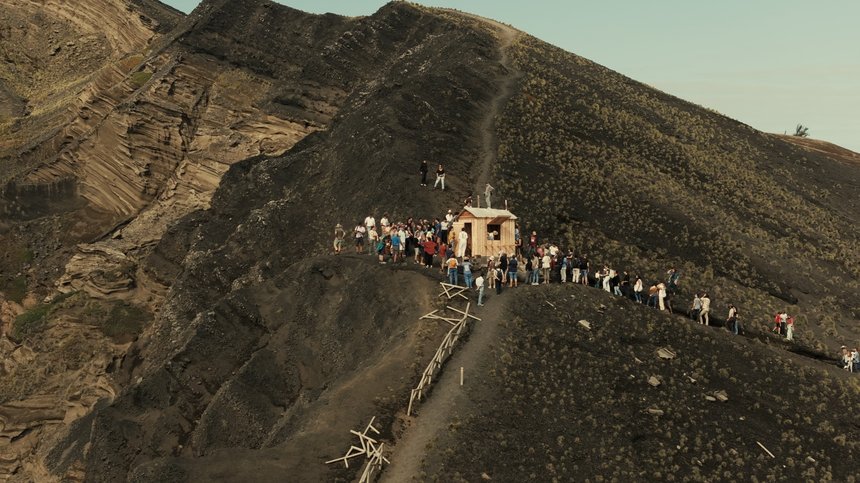
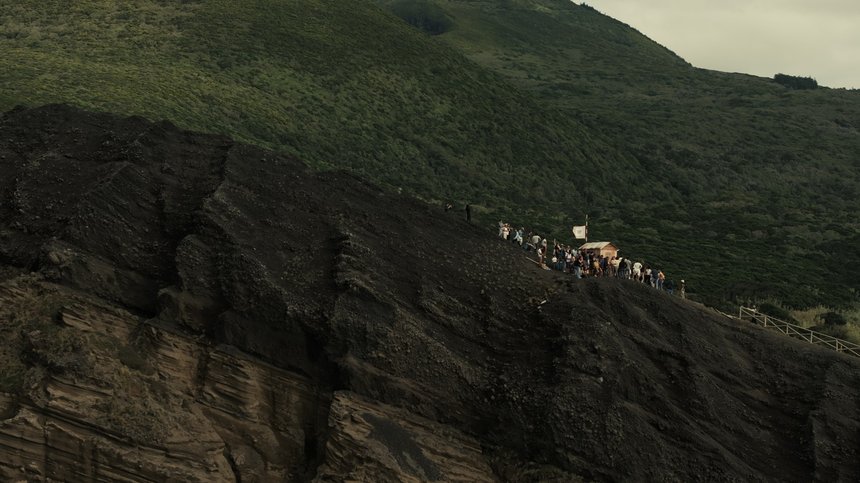
Following the inauguration of the new Whale Lookout at Costado da Nau, we continued our journey to the Capelinhos Lighthouse, where we were treated to the world premiere of the piece “Whale Suite”, composed by Saar Van de Leest and Florence Henry and performed by musicians from the Horta Regional Conservatory: Cláudio Cruz, Ana Maria Rosa and Ema Gonçalves. The lighthouse deck was packed; the double bass, the vilolenclo, the saxophone and the aquatic soundscape enveloped the audience, whilst the TimeCircus collective, with their surprising art installations – made solely from local materials gathered in Capelo – served food – rumour has it it was whale meat!
At the Interpretation Centre, a birthday cake was served, preceded by an emotional speech by the Regional Director for the Environment, Dr Ana Cristina Rodrigues.
The Fanfarra Artista Faialense resumed the procession, crossing the volcanic landscape like a hypnotic echo of whaling memories, whilst four people framed them with a photographic backdrop of the eruption of the Capelinhos Volcano.
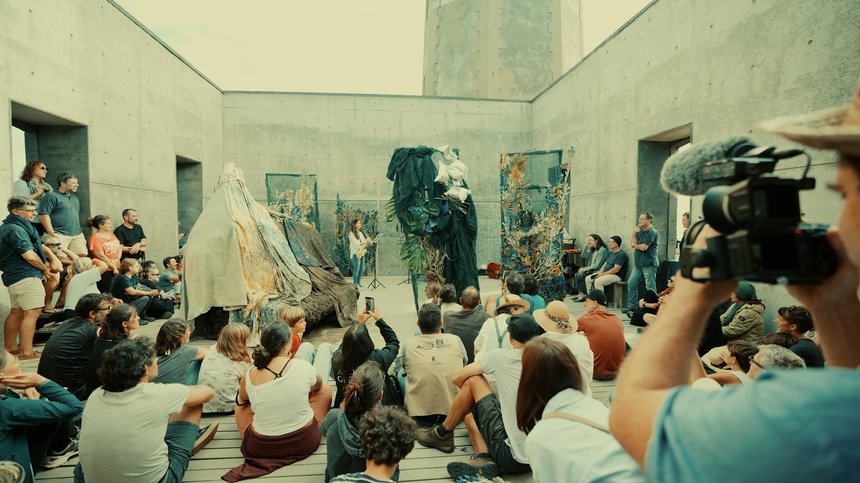

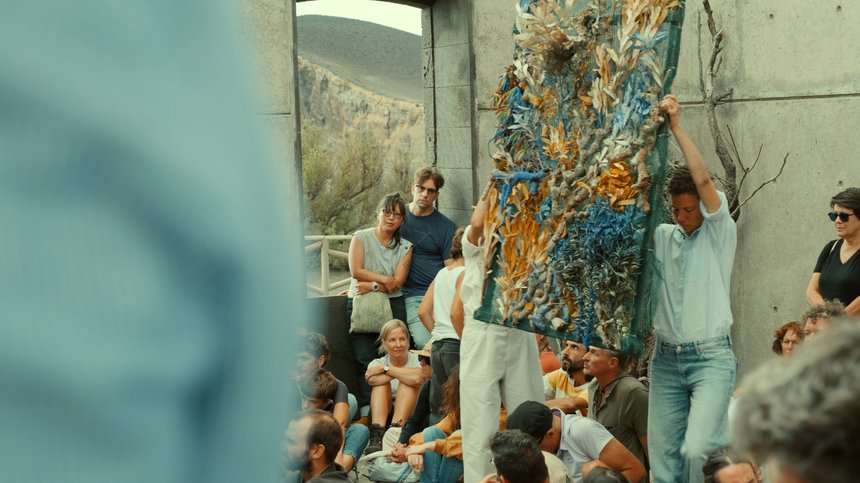

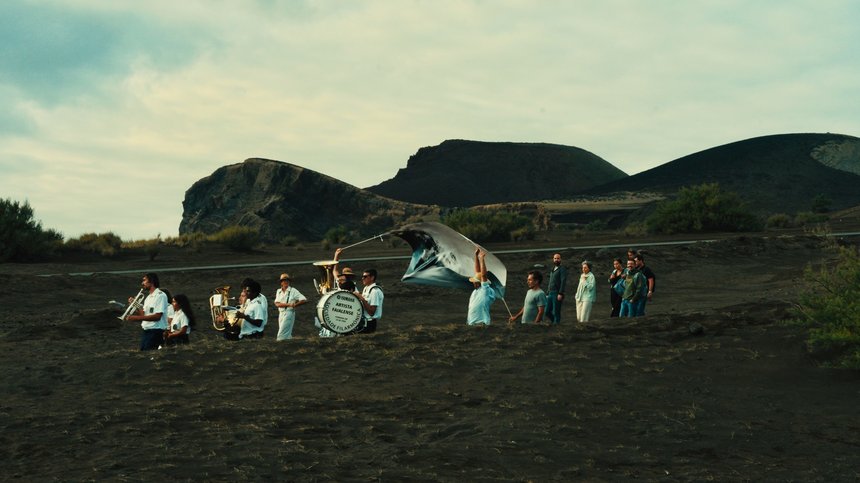

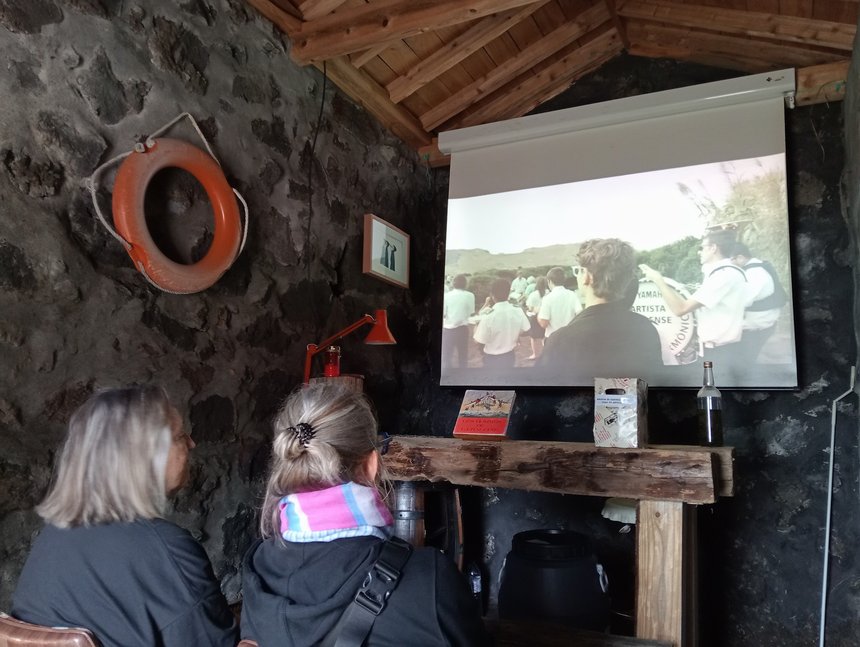
One of the lasting memories is the Fanfarra’s rendition of the theme ‘A morte do arpoador’ from the film ‘Os Homens da Baleia’, shot in 1956 with the whalers of Comprido and screened at the Casa dos Botes to a packed house. The debate featured João C. Pinheiro, the son of a whaler, José Deck Mota, Luis Bicudo and Filipe Porteiro.
Outside the Casa dos Botes, the bar was already serving pork sandwiches, prepared by Liseta Furtado, as well as the famous fish broth, prepared by Vitor Mota, whilst local beer and wine flowed freely amongst everyone.
The whalers, who had bravely carried the watch in their arms, could finally rest and dance.
The brass band took their seats and, for the first time in history – so they say – played a Chamarrita with woodwinds and brass! The dance was hosted by Vitor Borges and his family and continued throughout the night in a disco set up on the volcanic ash, with the boat Maria da Conceição serving as a DJ booth at the helm for DJs Doski and Rubi Tocha.
The Whaling Village of Comprido came back to life, even if only for a day!


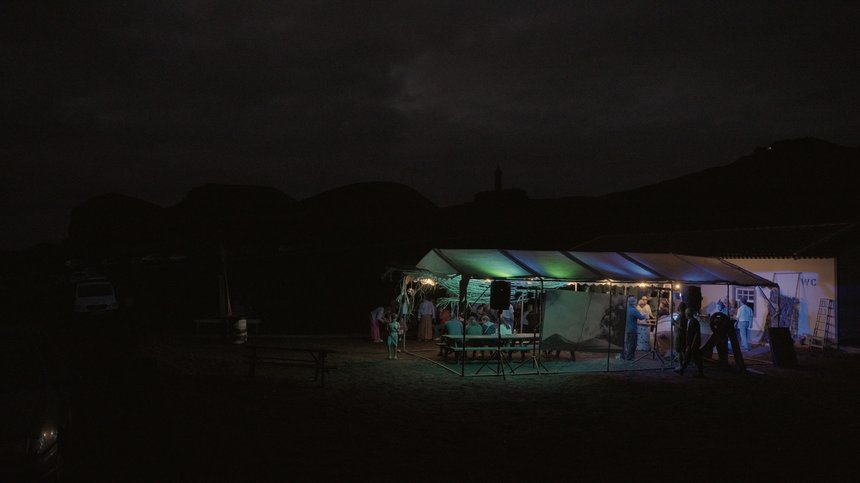
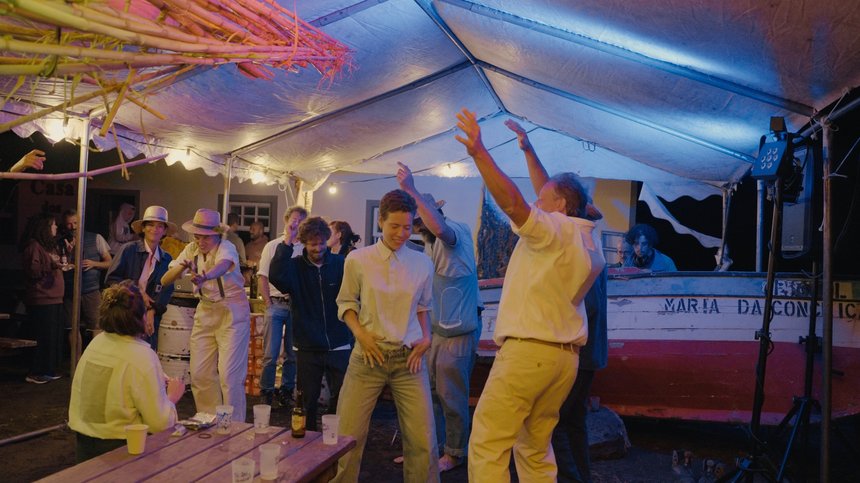
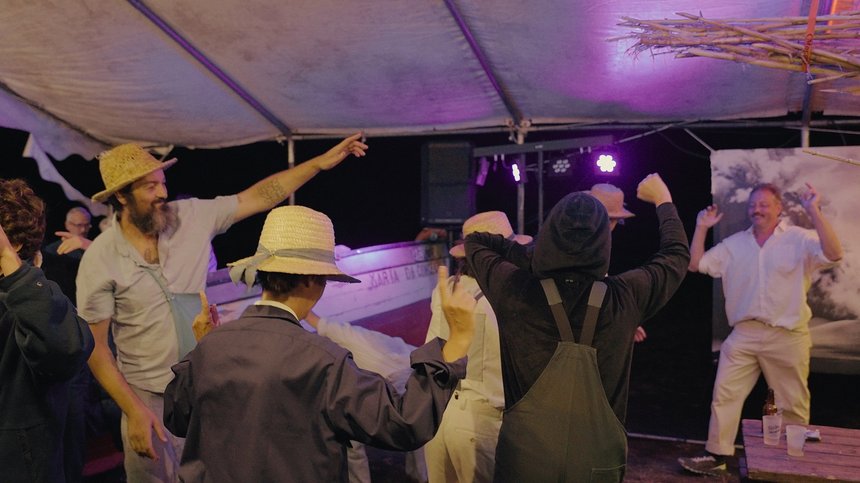


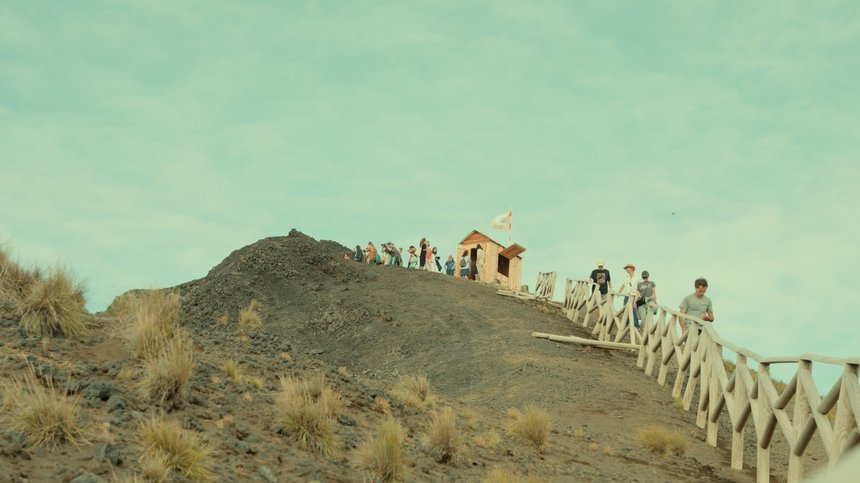
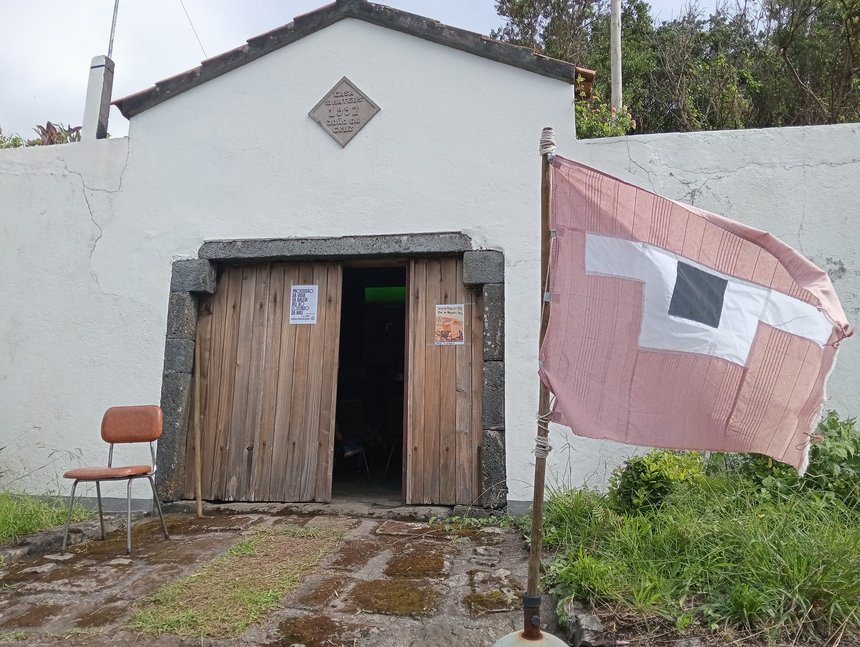
Sunday 12 October, at AvistaVulcão hosted a screening of footage from the procession of the new whale watch at Costado da Nau.
Continuous video screening from 1 pm to 8 pm at the Casa da Missão’s Video-Tasca (our old ox-cart garage, renovated into a Black Box!)
Just park your car and come in! Refreshments were served.
AVISTAR
The artists’ desire to create a mobile structure is not merely an aesthetic choice: it is a living tribute to the traditions of our own community. In the past, watchtowers were erected and dismantled every year, standing only during the hunting season. By reviving this logic of temporary, itinerant construction, the project builds a bridge between memory and contemporary creation.
For the Belgian collective Timecircus, this approach is also part of a long-standing tradition of community work developed across several countries — Bulgaria, Greece, Belgium, France — where it has become almost a tradition to build mobile structures powered exclusively by human strength.
In the case of the new Whale Watchtower at Costado da Nau dos Capelinhos, the idea was born three years ago from a shared dream between Timecircus and Avistavulcão as they imagined the AVISTAR project together. Today, with the installation of Baleia Vulcão, the first step of this grander dream has come to fruition — a journey that will continue with new replicas on the island of Pico and in São Jorge.
We would like to thank everyone who believed that such a collective artistic performance was possible; to everyone who helped build the installation; to everyone who lent a hand, both physically and morally, to carry the watchtower to the top of the ship’s side; and to everyone who made it possible for us to celebrate this popular, collective event together, and especially to the TimeCircus collective who made the dream a reality: Sebaastian, Zoe, Tom, Griet, Bram, Sig, Dayo, Saar, David, Gaelle and Florence.
See you next year!